KENYA: Understanding, Love, and Support: Key Elements for Disability Care in African Families
Sr. Jecinter Antoinette Okoth, FSSA
At a webinar that brought together participants from across Africa and beyond, a renowned clinical psychologist and psycho-oncologist emphasized that love, understanding, and care is essential to managing disability within African families.
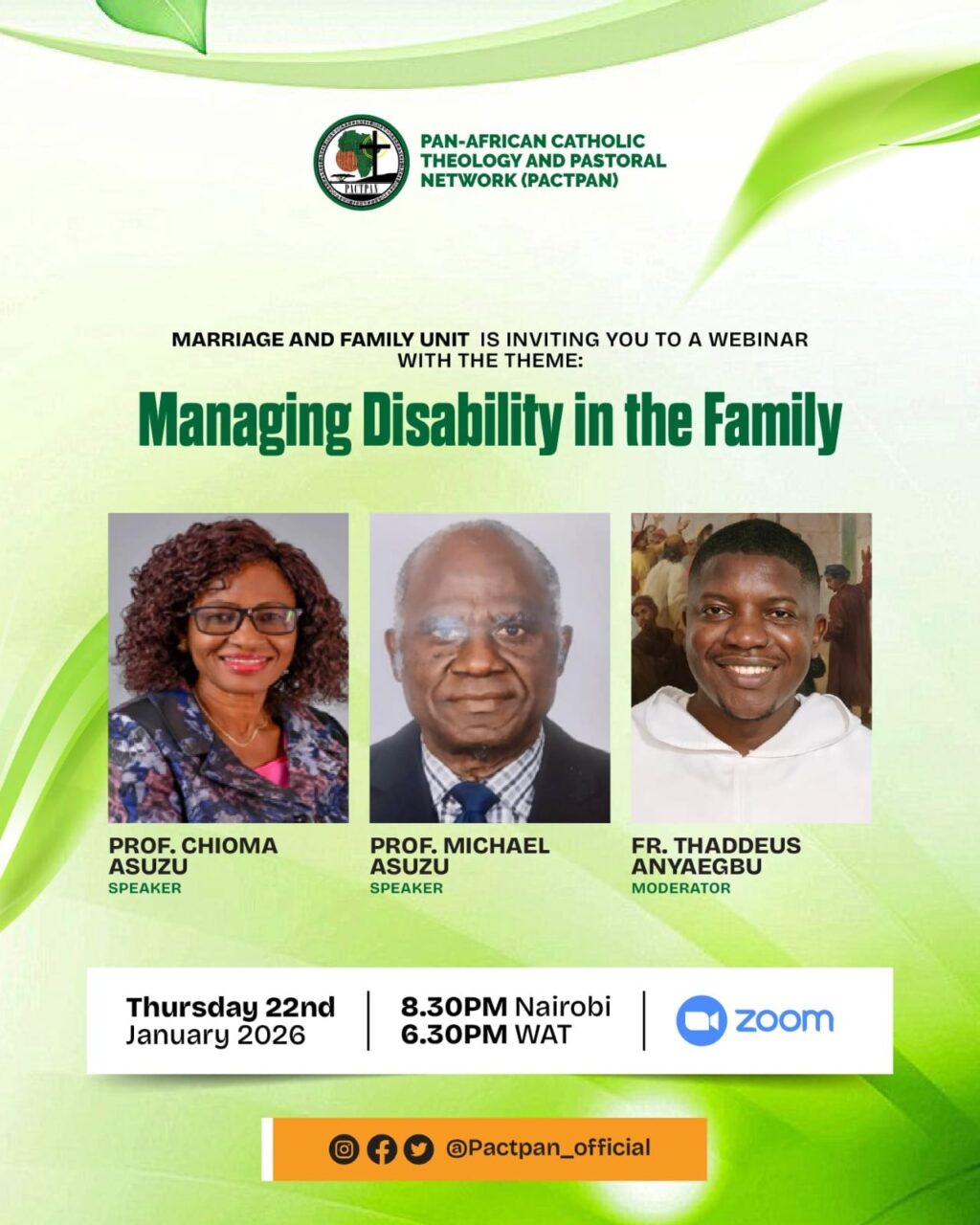
Speaking to an audience grappling with the realities of disability care across Africa, Professor Chioma Asuzu from Nigeria revealed that over 1.3 billion people worldwide live with disabilities. This, she said, represents 16 percent of the global population, of whom 80 percent reside in developing countries, where poverty, health inequities, and limited access to essential services compound their difficulties.
The professor categorized disabilities into several types: physical disabilities that affect mobility and dexterity, sensory disabilities involving vision and hearing impairments, intellectual and developmental disabilities such as Down syndrome and autism, and psychosocial disabilities related to mental health conditions. Many individuals, she noted, face multiple co-occurring impairments.
At the heart of her online presentation on Thursday, January 22, Prof. Asuzu pointed out that effective disability management in families begins with love and acceptance.
“When you are emotionally mature, it means you can love and manage this love in family life,” Prof. narrated, adding that the need to love children given by God, to accept them the way they are, goes a long way in managing disability in family life.
The Thursday webinar, moderated by a Dominican priest, Fr. Thaddeus Anyaegbu under the theme ‘Managing Disability in the family,’ was organized by the Pan-African Catholic Theology and Pastoral Network (PACTPAN), an inclusive and collaborative community of African Catholic scholars, theologians, church leaders, and grassroots pastoral agents working to advance theological reflection and pastoral innovation across the continent.
Stressing the role of families, Prof. Asuzu underscored that families need open communication, understanding, and both emotional and physical support from extended family members.
High self-esteem does not develop in isolation, the Prof. said; rather, children with disabilities build it through the ordinary rhythms of family life: “eating together, playing together, discussing together, and praying together.”
“Even at the dining table, they may be slow in eating. We need to encourage them, be there with them, and make sure they have enough,” she said, illustrating how patience must permeate every aspect of family interaction.
Professor Asuzu stressed the importance of appropriate parenting styles marked by patience, endurance, and loving discipline.
While acknowledging the dedication required to care for the disabled children, she said, “Raising even one child with disability demands as much energy as raising five children without disabilities. We need spiritual maturity and faith in God. Without this foundation, couples cannot cope.”
The Nigerian clinical psychologist extended her framework beyond the family to schools, churches, communities, and society at large.
Teachers require proper training to enhance the self-concept of children with disabilities, she argued, highlighting their abilities rather than stigmatizing their limitations. Churches, on the other hand, must ensure accessibility and trained volunteers, while communities need education to foster acceptance rather than abuse.
Since systemic discrimination persists in education, employment, and access to justice, Prof. called for enforcement of workplace accessibility mandates and inclusive employment practices to enable persons with disabilities to support themselves rather than resorting to begging.