AMECEA: Communication Directors Urged to Champion AI Ethics, Literacy as Church Warns Against Threat to Human Dignity
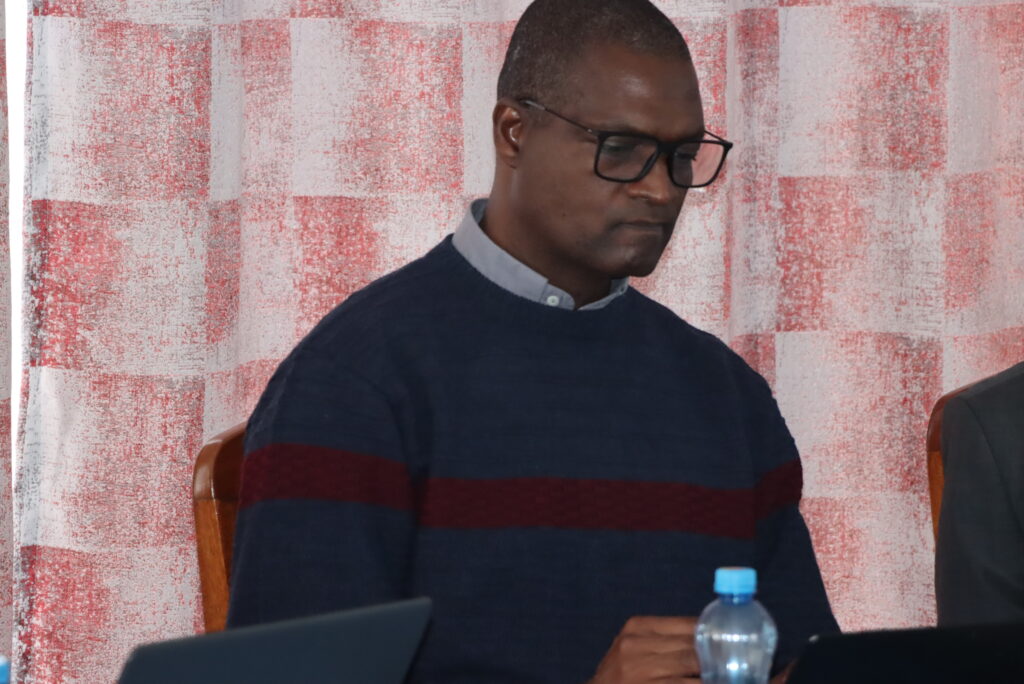
Sr. Jecinter Antoinette Okoth, FSSA
During their second session on Artificial Intelligence (AI), National communication directors from the Association of Member Episcopal Conferences (AMECEA) were reminded of the importance of upholding ethical standards in the use of AI, with an emphasis on the Catholic Church’s position that AI must never undermine human dignity or replace human intelligence.
Addressing about 10 participants during the online session on Tuesday, May 12, Fr. Andrew Kaufa, the AMECEA Communication Director, focused on the Vatican document Antiqua et Nova, which was published in 2025, on the relationship between AI and human intelligence and described as the most comprehensive teaching of the Catholic Church on AI to date.
“When we talk about Artificial Intelligence, the first reaction of priests, of bishops, and even of some lay people is a kind of negative reaction,” Fr. Kaufa shared his observation and clarified the misconception that neither Pope Francis nor Pope Leo XIV has condemned AI outright, but rather both have issued warnings against specific harmful practices and uses, particularly targeting those who design and deploy AI for commercial gain at the expense of the ordinary user.
He noted that the Church’s message has been directed at engineers, developers, and companies behind AI technology, urging them to prioritize human well-being over profit.
Fr. Kaufa shared the theological grounding of the Church’s ethical framework on AI, noting that Antiqua et Nova affirms that human intelligence is an essential aspect of being created in the image and likeness of God (Genesis 1:27). He narrated further that, God’s call for humanity to “till and care for the earth” places a direct responsibility on human beings to use their intelligence wisely and responsibly.
“We shouldn’t allow AI to replace human intelligence. AI doesn’t have any relation with any human being. It simply does what it has been taught to do,” he emphasized, adding that, unlike human beings, AI lacks the relational and emotional dimensions that define authentic human interaction.
The Malawian cleric emphasised several areas of ethical concern highlighted in Antiqua et Nova, the economic divide, health, education, misinformation, and deep fakes, technological warfare, and spiritual danger.
“AI can be deployed in ways that discriminate against the poor and marginalized, deepening existing social divides.” At the same time, “People are increasingly turning to AI for medical advice, bypassing qualified professionals and, in some cases, obtaining dangerous recommendations,” Fr. Kaufa explained.
He underscored that students nowadays use AI to write dissertations and essays, graduating without genuinely mastering their fields of study. Besides, communicators face a growing challenge in helping audiences distinguish authentic information from AI-generated falsehoods.
Giving reference to the ongoing war across the globe, Fr. Kaufa expressed that AI-powered weapons systems, being deployed in conflict zones including Ukraine and the Middle East, are incapable of moral judgment, resulting in attacks on hospitals and schools.
He further said that the Vatican document that was produced in collaboration between the Dicastery for Culture and Education and the Dicastery for the Doctrine of Faith, warned that over-dependence on AI risks becoming a form of idolatry, a surrendering of God-given human capacity to an artefact of human making.
He encouraged AMECEA Communication Directors to promote AI literacy within their respective offices and Episcopal Conferences, equipping people to engage with the technology critically and responsibly.
Additionally, the communicators need to actively work to mitigate the risks that AI presents, acknowledging that while it is a powerful tool, it is also susceptible to abuse and manipulation. At the same time, they must advocate for AI regulation, urging governments and institutions to review their legal frameworks to keep pace with the rapidly evolving impact of AI on society.