KENYA: Kenyan Prelate Urges Teachers to Mould Learners’ Character, Not Just their Minds
Sr. Jecinter Antoinette Okoth, FSSA
A Kenyan Bishop has challenged educators in Catholic schools across the country to go beyond classroom instruction and mould learners to live their Catholic identity, warning that faith cannot be reduced to a subject on a timetable but must permeate every relationship, decision, and act of leadership within the institutions.
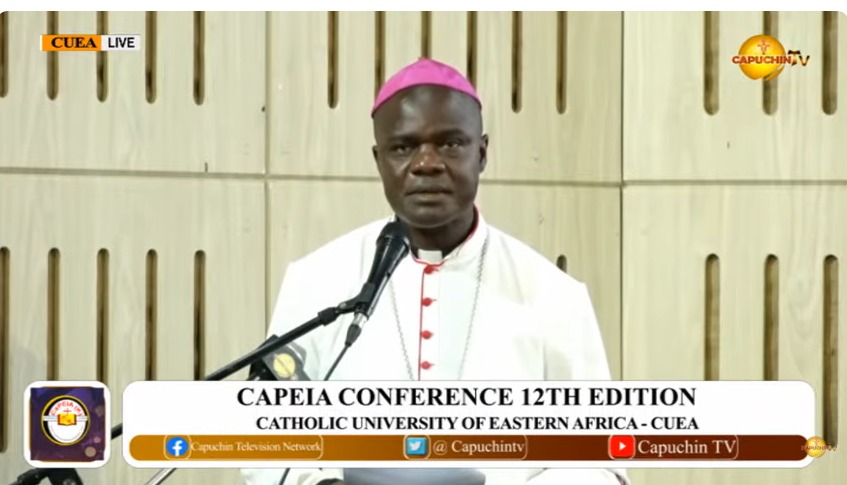
Delivering the keynote address at the 12th Edition of the Catholic Private Educational Institutions Association (CaPEIA) Conference on Tuesday, April 7, the Local Ordinary of Kenya’s Kitale Diocese, Bishop Henry Juma Odonya, told headteachers, principals, and education leaders who gathered at the Catholic University of Eastern Africa (CUEA) in Nairobi, for a week-long conference, that “Catholic identity is not simply taught it is lived.”
He referenced Saint John Paul II, who pointed out that “Catholic schools must be communities whose values are communicated through the interpersonal and sincere relationships of their members.”
Bishop Odonya told the gathering of education secretaries, religious education advisors, school heads, and partners that these values are “seen in how we relate to one another, how we lead, how we discipline, and how we serve.”
The conference, held under the theme “Catholic Schools: Rooted in Faith, Rising with Purpose,” drew its inspiration from the Prophet Jeremiah 29:11, a scripture the Bishop described not just as a message of consolation but as a call to trust in God’s providence and to actively participate in His plan through the vocation of educating the young.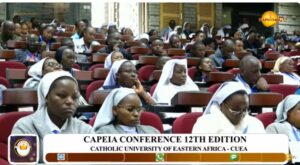
Bishop Odonya, who also serves as the vice chairman for the Commission for Clergy and Religious (Liaison) at the Kenya Conference of Catholic Bishops (KCCB), anchored his address in the conviction that Catholic education has always transcended the transmission of knowledge. Its core mission, he stressed, is integral formation, shaping the whole person intellectually, spiritually, morally, physically, and socially.
He cited Pope Francis’s assertion that education is “an act of love” and “like giving life,” urging educators to see their work not as routine duty but as a transformative encounter that nurtures human dignity and awakens purpose.
In a world increasingly marked by uncertainty and moral relativism, the Bishop called on Catholic schools to stand firm as beacons of truth and hope. He invoked Pope Benedict XVI’s teaching that the task of education is to “form the human person, directing him or her towards his or her ultimate end and the good of the society.” He further reminded the Catholic teachers that their responsibility extends beyond preparing learners for employment to preparing them for life rooted in values, responsibility, and faith.