KENYA: Theology Must Serve Salvation, Not Just Scholarship: Archbishop Anyolo at CUEA Conference
Sr. Jecinter Antoinette Okoth, FSSA
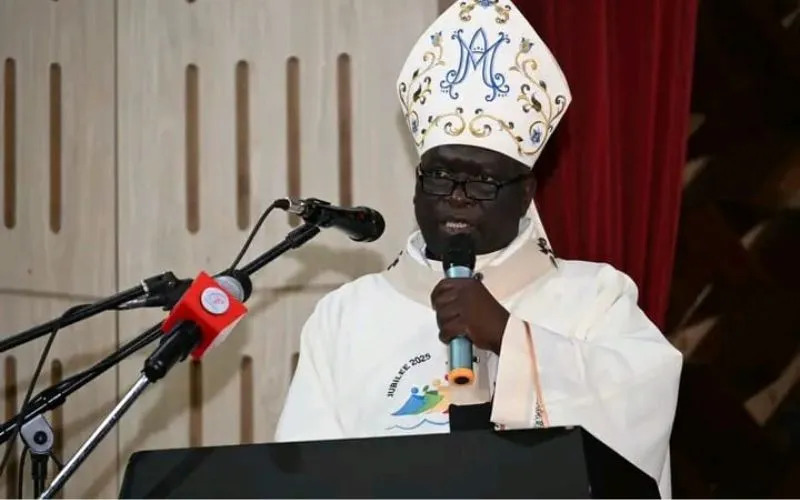
At a recent inaugural conference of the African Centre of Excellence in Theology and Canon Law, the Archbishop of Kenya’s Nairobi Archdiocese emphasized that these two disciplines must function with the salvation of souls as their supreme purpose, declaring that academic excellence in this centre should serve as ways toward healing, truth, and communion rather than mere intellectual pursuits.
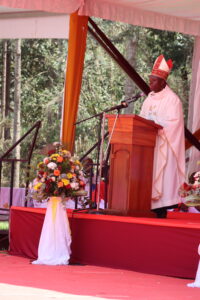
Addressing participants at the Catholic University of Eastern Africa (CUEA) on Tuesday, December 2, Archbishop Philip Arnold Anyolo articulated a vision for theological scholarship deeply rooted in the African context while remaining faithful to the universal Church.
“This Centre must operate not as a mere school of ideas, but as a service to the People of God and to society,” the Archbishop, who doubles as the Pro-Chancellor of CUEA, told the distinguished guests, faculty members of the University, and academic leaders gathered for the inauguration of the center.
He invoked the Church’s foundational principle that the salvation of souls is the supreme law, and the essential framework within which the new center must function.
The Kenyan Prelate expressed appreciation for the integration of theology and canon law within a single institution and noted that the Church thrives where truth meets charity and justice is clothed in compassion.
He further challenged the centre to form scholars “who are not only intelligent but wise, not only learned but pastoral, and not only African by origin but African in vision.”
Placing the center’s launch within Africa’s broader search for meaning, justice, reconciliation, and hope, Archbishop Anyolo said that theology must interpret faith within the real struggles and aspirations of African people. At the same time, canon law must express justice informed by charity and guided by mercy.
Speaking to future students and scholars of theology and canon law, the Prelate reminded them about the purpose of academic work, saying, “Remember always that your research is not for titles but for service,” and “Your libraries should never be distant from parishes, hospitals, families, and the struggles of daily life.”
The Archbishop called for a distinctive approach to scholarship that moves beyond mere imitation to genuine incarnation, thinking deeply from the African context for the good of the whole Church.
Besides, he urged the center to cultivate scholarship that listens to the joys and sufferings of African people and responds with intellectual honesty and spiritual depth.
The Archbishop thanked the leadership of CUEA and the center’s founders, invoking the guidance of Mother Mary, Seat of Wisdom, and the Holy Spirit. He expressed his hope that the center would grow in wisdom, integrity, and humility, serving both Church and society with distinction.
“May this Centre become a light for Africa and a gift to the universal Church,” the Archbishop said.