KENYA: Faith and Reason Must Walk Together: African Congress on Catholic Education
Sr. Jecinter Antoinette Okoth, FSSA
To form individuals capable of dialogue, solidarity, and moral courage in society, the Catholic Church has called for a renewed education that bridges faith and reason, the Vice Chancellor of the Catholic University of Eastern Africa (CUEA) has said.
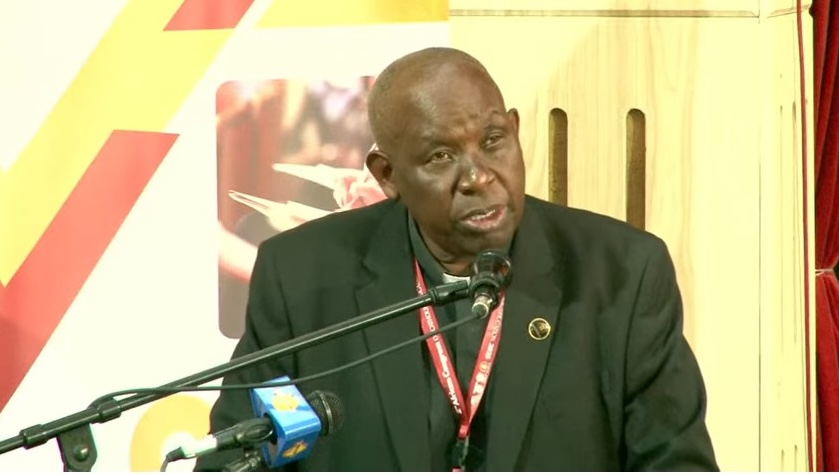
Speaking on Thursday, December 4, at the second African Congress on Catholic Education, Very Rev. Fr. Stephen Mbugua Ngari highlighted the Church’s proposal for a “Global Compact on Education,” initiated by Pope Francis in 2019, and noted that the compact on education “Is described not merely as a policy initiative, but as a spiritual, cultural, and social commitment to rebuild the foundations of human formation.”
According to Fr. Mbugua, the world is currently facing cultural fragmentation, wars, climate change, technological upheaval, moral uncertainty, and numerous challenges, hence the need for the Global Compact on Education.
The Catholic Church has always viewed education as a sacred mission, rooted in the belief that every human person is created in the image of God and called to the fullness of truth.
The Vice Chancellor, who also serves as the University’s rector, noted that the compact on education initiative is deeply communal and requires parents, educators, religious leaders, institutions, and society to “walk together.”
The goal, he said, is to place the human person at the center, promote fraternity, and foster a new culture of encounter, ultimately aiming to “heal the fractures in humanity by forming hearts, not just minds.”
In 2020, the virtual compact on education event organized by the Congregation for Catholic Education in the Vatican served as a crucial step in transforming Pope Francis’ concept into a global movement.
In his message then, Pope Francis said, “To educate is always an act of hope, one that calls for cooperation in turning a barren and paralyzing indifference into another way of thinking that recognizes our interdependence.”
He posed, “If our educational systems are presently marked by a mindset of replacement and repetition, and are incapable of opening up new horizons in which hospitality, intergenerational solidarity, and the value of transcendence can give birth to a new culture, would this not signify that we are failing to take advantage of the opportunity offered by this historic moment?”
Fr. Mbugua, who has been at the helm of the Catholic University since 2018, noted that Pope Leo XIV also recognizes the importance of this educational mission in the African context.
The Vice Chancellor said that Pope Leo XIV views education as a critical tool for promoting dignity, justice, and hope, and has called for the expansion of Catholic education to address poverty, form the whole person, and improve the affordability and social inclusivity of schools.
The four-day conference, themed “Catholic Education and the Promotion of Signs of Hope in the African Context,” aimed to transform education into a formative agent that addresses the geopolitical landscape, ethical leadership, good governance, and recognition of human dignity across technological and research development.
Fr. Mbugua proposed that African institutions of higher learning enhance a framework in which education transforms societies and governments into a family aligned for the continent’s common good.
In his Thursday address to hundreds of participants from Africa, the Vatican, and other parts of the world, he emphasized that the holistic approach to education is firmly rooted in the Church’s intellectual history.
“St. Thomas Aquinas teaches that education is the process of leading one from potentiality to actuality, forming the whole person’s intellect, will, and affections, toward the pursuit of truth and goodness,” the Kenyan cleric said and continued, St. John Henry Newman on the other hand, insisted that a Catholic education must cultivate an integrated, well-formed mind and develop both faith and reason, as “knowledge is one,” unified by the truth of God.