VATICAN: Vatican Issues Pastoral Document on Inclusion of Persons with Disabilities in Africa
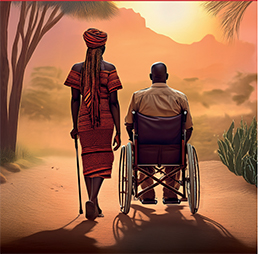
Persons with Disability. Credit: Vatican
By Sr. Jecinter Antoinette Okoth, FSSA
In recent years, the Catholic Church has been urging the faithful to embrace synodality through walking together, listening, and discerning in communion. Using the same Spirit, the Dicastery for Promoting Integral Human Development (PIHD) issued a pastoral document titled ‘Integral Human Development of People with Disabilities: Sub-Saharan Africa,’ to highlight the Church’s commitment to dignity, inclusion, and participation.
Born from a series of online consultations with local churches across 30 Sub-Saharan African countries, the document gathers insights from bishops’ conferences, Caritas, Catholic organizations, Religious orders, experts, and persons with disabilities themselves, who ensured their voices influenced the Church’s pastoral vision.
According to the document, those consulted emphasized the urgency of implementing Pope Francis’ call to “prevent the marginalisation of the sick and disabled,” as stated in the Apostolic Constitution Praedicate Evangelium, which focuses on the Roman Curia and its service to the Church in the world.
Some of the subtopics discussed in the document include: Social inclusion, access to care, culture and traditions, towards a change of mindset, obstacles to integral human development, the importance of listening to each other, real inclusion, and the need to understand the relevance of social factors, among others.
“This work aims to assist in envisioning the future with hope, recognizing and valuing the seeds, the shoots, and the fruits that already exist,” the document reads in parts. At the same time, it emphasizes the need for greater coordination and networking among Church organizations, partnerships with civil society, and enhanced collaboration with governments to promote policies that focus on persons with disabilities.
Vatican encourages Churches to improve accessibility by removing architectural barriers, ensuring inclusive education, and training teachers with specific skills.
At the same time, pastors and lay ministers, the PIHD document narrates, must be equipped to understand and respond to the diverse realities of disability, cognitive, sensory, motor, and neurological, so that all the faithful are welcomed and accompanied.
In the spirit of synodality, the document points out that persons with disabilities must not only be welcomed but also empowered as active participants in ecclesial and social life. Their “apostolic capacities” and their unique contributions to evangelization are recognized as a gift to the entire People of God.
Besides, local churches need to celebrate progress, share success stories, and adapt initiatives to their own cultural contexts.
Referencing Pope Francis’ Encyclical letter, Fratelli Tutti on fraternity and social friendship, each person therefore must be “helped to grow in their own distinct way,” which in Sub-Saharan Africa calls on fostering innovation and collaboration across pastoral ministries.
The Dicastery hopes that the document Integral Human Development of People with Disabilities: Sub-Saharan Africa, which is available online in English, French, Portuguese, and Italian, will serve as both a pastoral tool and an inspiration to amplify voices often marginalized. Besides, the document is expected to ensure that the road to integral human development leaves no one behind, breaks down barriers, and nurtures social inclusion through full participation in community life.