AMECEA: Synod Implementation Opens New Chapter for Church Reform, Says AMECEA Secretary General
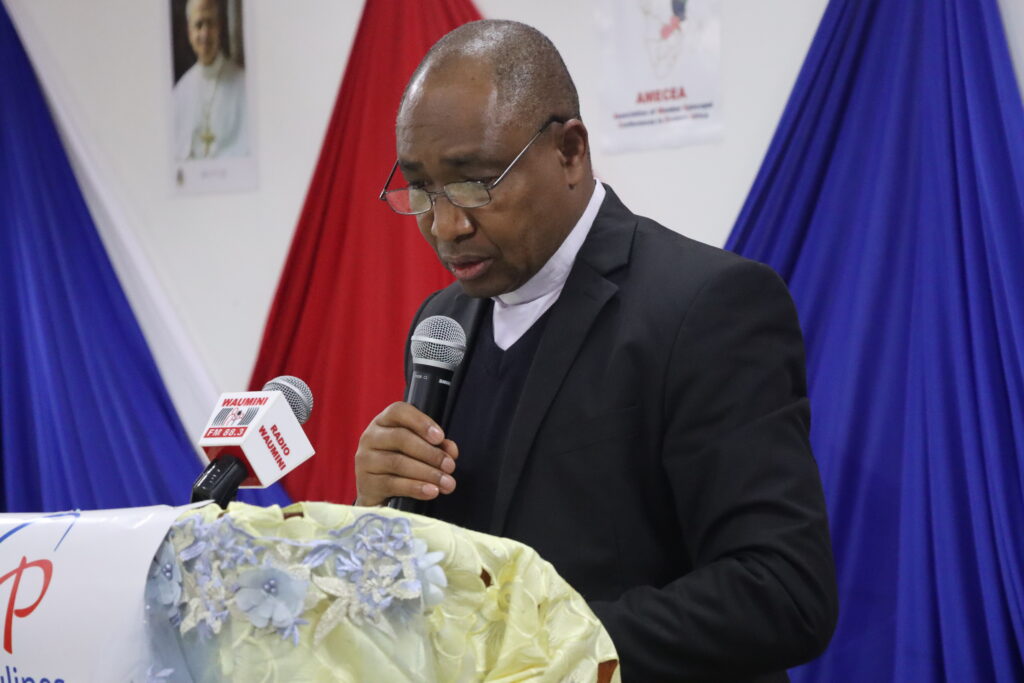
Fr. Anthony Makunde
By Sr. Jecinter Antoinette Okoth, FSSA
At the launch of the simplified synod on synodality Final Document on Wednesday, July 23, the Secretary General of the Association of Member Episcopal Conferences in Eastern Africa (AMECEA) described the implementation phase of the Synodal journey as a new chapter in the life of the Church, calling for a shift toward greater collaboration and shared decision-making within Church structures.
In his message to an audience of about 100 attendees present at the launch venue and others participating online, Fr. Anthony Makunde emphasized that this phase moves the Church from dialogue and discernment to concrete actions that embrace communion, participation, and mission at all levels of Church life.
Reiterating Pope Francis’ message at the end of the second phase of the synod that was in October 2024, Fr. Makunde said, “The implementation phase is not the conclusion of the synodal journey, but the beginning of a new chapter in the Church’s life. The journey of synodality is what God expects of the Church in the third millennium…an invitation for local churches to discern and implement its orientations.”
The Tanzanian cleric pointed out that the General Secretariat of the XVI Ordinary General Assembly of the Synod of Bishops issued guidelines for the implementation phase 2025-2028 under the document titled ‘Pathways for the Implementation Phase of the Synod.’
He stressed that the Final Document is not a post-synodal apostolic exhortation but rather, the document “participates in the ordinary Magisterium of the Successor of Peter,” which Pope Francis offered to the entire Church, as an “authoritative orientation for her life and mission.”
The Secretary General of AMECEA highlighted the four key stages for the implementation phase to the participants, pointing out that from June 2025 to December 2026, the implementation will be at the level of parishes, dioceses, and other ecclesial structures such as parish and diocesan pastoral councils and finance councils.
In the first half of 2027, the evaluation assemblies in the Dioceses and Eparchies will take place, and in the second half of the same year, the evaluation assemblies in the national and international Episcopal Conferences, in the Eastern Hierarchical structures, and other ecclesial groupings will be carried out.
In the first quarter of 2028, there will be the continental evaluation assemblies, and in October of the same year, the synodal journey will culminate with the Ecclesial Assembly at the Vatican.
The local implementation, he said, is meant to encourage Episcopal Conferences, dioceses, and parishes to study and apply the Final Document, to revitalize or establish participatory structures such as pastoral councils, and synodal committees, and the level is also expected to revisit formation programs for clergy and laity to promote a synodal spirituality and way of life.
According to Fr. Makunde, the key objective of the implementation stage is to explore new practices and structures that promote a synodal way of living the Church’s mission, enabling the People of God to journey together in building the Kingdom of God and witnessing to Gospel values.
The phase also helps to identify formation pathways that will lead to a genuine synodal conversion across various ecclesial contexts, and to continue the exchange of spiritual gifts, deepening communion among local churches within the one universal Church.
During the implementation, all the people of God are expected to act for the success of synodality.
“Every baptized person, in the diversity of charisms and vocations, from families and Small Christian Communities to the universal Church, has a role to play in a spirit of differentiated co-responsibility,” the cleric said and added that diocesan and eparchial Bishops are also actors in the implementation phase, as they bear primary responsibility in their local churches.
Besides, close Collaborators of the Bishop, including priests, deacons, participatory bodies, and diocesan synod animation teams, are equally key players in gathering and synthesizing the fruits of local discernment, as outlined in the Pathways document.
Additionally, the Ecclesial Groupings, such as metropolitan sees, episcopal conferences, and regional and continental associations of bishops, are part of the implementation team, and everyone is called to “embrace this journey with humility, openness, and missionary courage.”