AMECEA: Simplified Final Document Offers Practical Guide for a Synodal Church
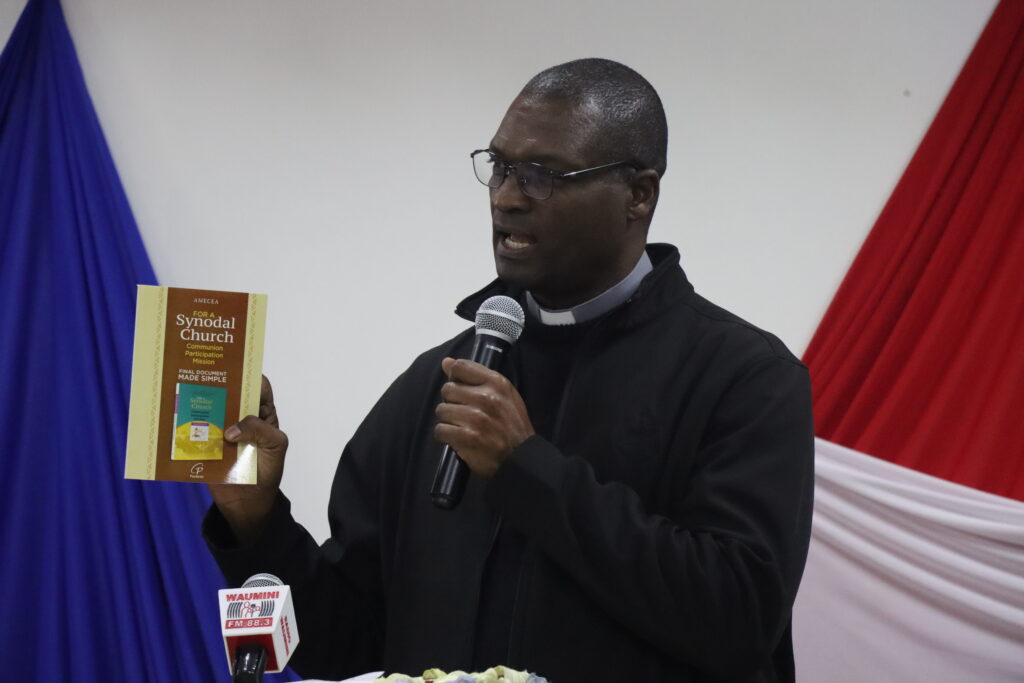
Fr. Andrew Kaufa
By Sr. Jecinter Antoinette Okoth, FSSA
The simplified version of the Synod’s Final Document that was launched on Wednesday, July 23, by the Association of Member Episcopal Conferences in Eastern Africa (AMECEA) has been designed to help Local Churches in the region and beyond to practically implement the Synod’s recommendations, an AMECEA official has said.
In his address to participants, Fr. Andrew Kaufa, the AMECEA Communication Coordinator, highlighted how the simplified text has broken down the complex theological language into accessible insights that parish communities, clergy, religious, youth, and lay faithful can easily understand and apply.
“As a Catholic, I have witnessed firsthand how Church documents often remain on shelves, gathering dust because they seem too theological and academic, too distant from our daily realities,” Fr. Kaufa, who doubles as the Deputy Secretary General of AMECEA disclosed to the participants and narrated further, “That is precisely why we created this simplified version of the Final Document.”
While the simplified version of the Final Document is a significant step, transformation in Small Christian Communities (SCCs) and parishes depends on how the document is put into practice. Hence, the need to focus on the section of the simplified document that stresses that effective implementation requires engaging with the document through practical exercises, whether as individuals, families, SCCs, parish councils, or members of ecclesial associations.
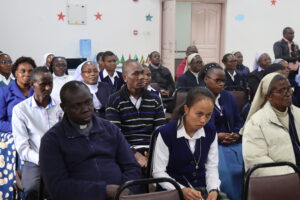
Fr. Kaufa explained how the book has outlined a roadmap for various groups in the Church. At the SCC level, the cleric said, the members will use the simplified document for reflections in 3 a three-step process: to read together aloud a given section, reflect together by using the discussion questions at the end of each chapter, and then act together by giving practical recommendations for implementation in the parish context.
At the parish level, the parish council members are encouraged to use the simplified document as their main formation guide during the implementation phase and even afterward. According to Fr. Kaufa’s recommendation, each monthly meeting can be structured around a specific chapter, accompanied by practical action points.
Talking about how to use the simplified synodal book for the formation programs in the Church, the member of the Missionaries of the Company of Mary (SMM) stressed that Catechists should insist on the “Rite for Christian Initiation of Adults (RCIA) to move from mere instruction and memorization of Church doctrine to “internal pilgrimage.” At the same time, seminarians should be formed to understand “co-responsibility rather than clerical dominance,” and for the laity, the document acts as a tool to help them “claim their rightful place in Church governance and mission.”
In conclusion, Fr. Kaufa urges parishes, SCCs, and Catholic institutions to study the document and live it.
“Make it your community’s formation curriculum. Use it as your parish council’s strategic plan. Let it guide your family discussions about faith. Allow it to reshape your understanding of the Church,” he said, and added, “I challenge you: don’t let it become another book on your shelf.”