AMECEA: AMECEA Launches New Book on Implementation of Synod
By Rose Achiego Ande
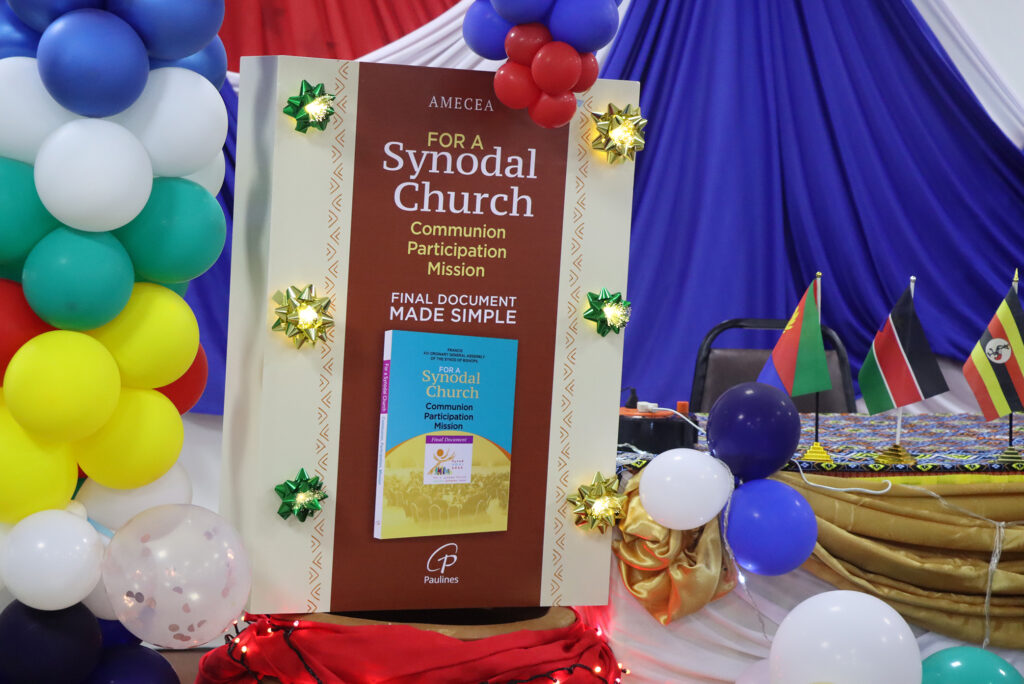
On 22nd July 2025, the Association of Member Episcopal Conferences in Eastern Africa (AMECEA) brought together clergy, lay leaders, and church communicators from across the region to officially launch a book titled A Synodal Church: Final Document Made Simple. This accessible 72-page guide, published in collaboration with Paulines Publications Africa, translates the Synod’s theological vision into practical steps for implementation within local Church contexts.
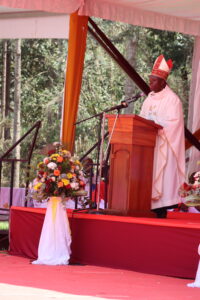
Delivering the keynote address, Most Rev. Martin Kivuva, Archbishop of the Catholic Archdiocese of Mombasa, Kenya, and the Vice Chairman of the Kenya Conference of Catholic Bishops (KCCB), Commission for Social Communication, reflected on the inclusive spirit of the Synod, emphasizing that it created space for all the baptized to be heard. He urged communities to move beyond merely listening and instead begin embedding synodality into everyday parish life.
Archbishop Kivuva, who participated in both phases of the Synod Assembly in Rome alongside Archbishop Anthony Muheria, described the experience as a defining moment for the Church to embrace inclusivity. “The Synod was a chance for everyone to participate. Now, we are being called to act,” he emphasized.
The prelate further suggested five action points that can be used for the implementation of the synodal journey.
“First, let us establish ‘Synodal Teams’ in every parish, groups that study this document and identify local applications of synodal principles,” he said, and continued, “let us then institutionalize ‘Conversation in the Spirit’ in all our decision-making processes, from parish councils to diocesan assemblies.”
The third action point, the Archbishop said, “let us create formal recognition and formation programs for lay ministers, especially women who already carry much of our pastoral work,” additionally, “let us establish regular inter-diocesan exchanges where we share successful synodal practices and learn from each other’s charisms,” and finally, “let us integrate synodal methodology into our Seminary formation and continuing education for clergy, ensuring our future leaders are equipped for participatory leadership.”