AMECEA: SSSCBC Launches Five-Day Peacebuilding Workshop
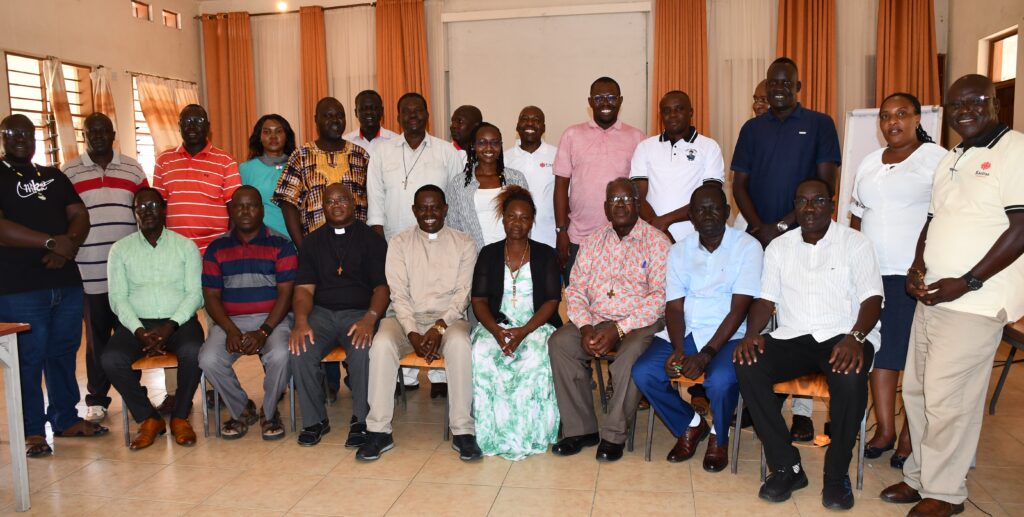
Group photo taken during the AMECEA, SSSCBC Advocacy workshop in Juba
By Ginaba Lino
The Association of Member Episcopal Conferences in Eastern Africa (AMECEA), in collaboration with the Sudan and South Sudan Catholic Bishops’ Conference (SSSCBC), on Monday, April 20, launched a five-day peacebuilding and advocacy workshop in South Sudan, bringing together diocesan Justice and Peace Commissions and Caritas staff in a renewed effort to strengthen grassroots capacity-building for peace, reconciliation, and civic engagement.
The workshop aimed to equip participants with practical tools, knowledge, and strategies to address conflict and promote social cohesion across dioceses. The initiative comes at a critical time as the country continues to grapple with local tensions and uncertainty surrounding the prospects for democratic elections.
The workshop, held under the theme, “Equipping participants with tools, knowledge, and skills for continued diocesan peacebuilding strategies,” underscores the Catholic Church’s sustained commitment to long-term peace efforts rooted in community structures.
Speaking during the opening session, Rev. Fr. Paul Mung’athia Igweta, Coordinator of the Department of Promoting Integral Human Development (PIHD) at AMECEA, described the gathering as both a capacity-building forum and an advocacy platform for peace in South Sudan.
“This very meeting is an advocacy meeting for peace,” Fr. Igweta said, recalling the 2018 AMECEA Bishops’ Assembly in Addis Ababa, where regional Church leaders expressed deep concern about the situation in South Sudan and committed to mobilizing resources, both human and financial, to support peace initiatives.
He noted that AMECEA has actively engaged with the Church in South Sudan through a series of meetings, international collaborations, and leadership engagements aimed at strengthening the Church’s role in national reconciliation processes.
“We have not only prayed for South Sudan since 2018, but we have also facilitated participation in international forums, supported engagements with governance institutions, and accompanied the Church in its prophetic mission,” he said.
Fr. Igweta acknowledged that while significant efforts have been made, lasting peace remains a work in progress. However, he emphasized the importance of the Church’s “prophetic voice” in advocating for justice, empowering communities, and promoting Catholic social teaching as a framework for societal transformation.
The workshop was also designed to contribute to preparations for peaceful and credible elections in South Sudan, an objective that has faced repeated delays, including the postponed 2024 polls. Fr. Igweta urged participants to reflect on their role in fostering civic responsibility and electoral preparedness.
“It is our prayer that this country prepares for peaceful and democratic elections,” he said. “Nothing good comes on a silver platter, and we must not lose hope. This meeting is part of our collective effort to ensure that hope is sustained.”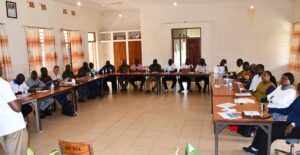
The five-day program included sessions on conflict analysis, peacebuilding methodologies, advocacy strategies, and community dialogue facilitation. In the five-day workshop, the participants also developed diocesan action plans tailored to address local challenges and contribute to broader national peace efforts.
Fr. Igweta further highlighted AMECEA’s intention to strengthen coordination mechanisms between the regional body and the South Sudan bishops’ conference to ensure effective implementation and monitoring of peace initiatives.
“We want to create a common understanding and ownership of this program,” he said. “We also aim to share technical knowledge, learn from experiences in other countries such as Kenya, and establish structures that will support ongoing engagement and accountability.”
He added that lessons from other AMECEA member countries could be adapted to the South Sudan context, particularly in areas such as electoral processes and community mobilization.
The workshop also reflected the Church’s broader concern for regional stability, including the ongoing conflict in neighboring Sudan. Fr. Igweta noted that while plans for a solidarity visit to Port Sudan had been disrupted due to insecurity, the current training serves as an alternative platform to address emerging challenges and strengthen regional solidarity.
“We are aware of the suffering of people affected by conflict, and the Church must continue to raise its voice and engage global partners to restore human dignity,” he said.
Fr. Louis Romano, Deputy Secretary General of SSSCBC, who officially opened the workshop on behalf of the conference leadership, described the gathering as a moment of unity and shared mission among Church workers.
“This is a moment of joy because we are meeting face-to-face as one family,” Fr. Romano said. “Our mission here is training, and by accepting this invitation, you have demonstrated your commitment to working for the common good of our people and our country.”
He commended participants for their willingness to engage in learning and collaboration, noting that the diversity of diocesan experiences would enrich discussions and outcomes.
“As people from different dioceses and backgrounds, we are blessed to be here,” he said. “We are also privileged to receive our colleagues from AMECEA, who have come with valuable expertise to support us.”
Fr. Romano encouraged participants to actively engage in group discussions and knowledge-sharing throughout the workshop, emphasizing that collaboration would be key to achieving meaningful impact at the diocesan level.
“It is through sharing and dialogue that we learn and grow,” he said. “This training will equip us to better serve our communities and respond effectively to the challenges they face.”
He also expressed appreciation to the AMECEA team for their continued support and commitment to the Church in South Sudan.
“You have not come empty-handed,” he said. “You have come to help us discover and strengthen what we already have, and for that, we are grateful.”
The workshop concluded in the development of concrete action plans that participants will implement in their respective dioceses, with a focus on promoting peace, reconciliation, and civic engagement.
As South Sudan navigates a complex socio-political landscape, Church leaders say initiatives such as this workshop are essential in building resilient communities and fostering a culture of dialogue and non-violence.
Fr. Igweta reaffirmed AMECEA’s long-term commitment to accompanying the Church in South Sudan, noting that outcomes from the workshop would inform discussions at the upcoming AMECEA Plenary Assembly scheduled to take place in Nairobi later this year.
“Your participation is very important,” he told participants. “What you share here will help shape future priorities and guide the Church’s mission in promoting peace over the coming years.”
He concluded with a call for perseverance, drawing inspiration from the life of Jesus Christ and the enduring message of hope.
“What people need is not the sound of guns, but the opportunity to live in peace—to farm, to educate their children, and to build their future,” he said. “This is the peace we must strive to achieve together.”
The workshop, which took place from 20th to 24th April 2026, with facilitators and participants engaging in intensive sessions aimed at transforming knowledge into action for sustainable peace in South Sudan.
The workshop brought over 20 participants from both Justice and peace commissions, Caritas Directors, SSSCBC Staff, AMECEA Team, and The Catholic Radio Network, representing the media in the advocacy workshop.