AMECEA: Synodality Demands Change of Heart and Pastoral Style, Says Fr. Makunde to Clerics
Sr. Jecinter Antoinette Okoth, FSSA
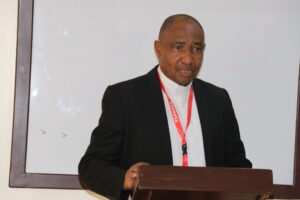
Addressing the national leadership of priests and rectors from across the Association of Member Episcopal Conferences in Eastern Africa (AMECEA) region, the Secretary General of the association has emphasized that transition to a synodal Church requires more than structural adjustments, but a conversion of heart, and a shift in pastoral style.
Fr. Anthony Makunde challenged the priests from the conferences to move away from traditional models of authority and embrace a ministry rooted in service and collaborative leadership.
In his opening speech at the Clergy Home in Kenya’s capital, Nairobi, on Tuesday, April 14, Fr. Makunde noted that synodality calls the Church to confront ministerial shortcomings such as “attitudes of superiority, a lack of listening, and resistance to collaboration.” To address these, he called for a “profound shift” from “leading over the people to walking alongside them, recognizing the dignity and responsibility of every member of the Church.”
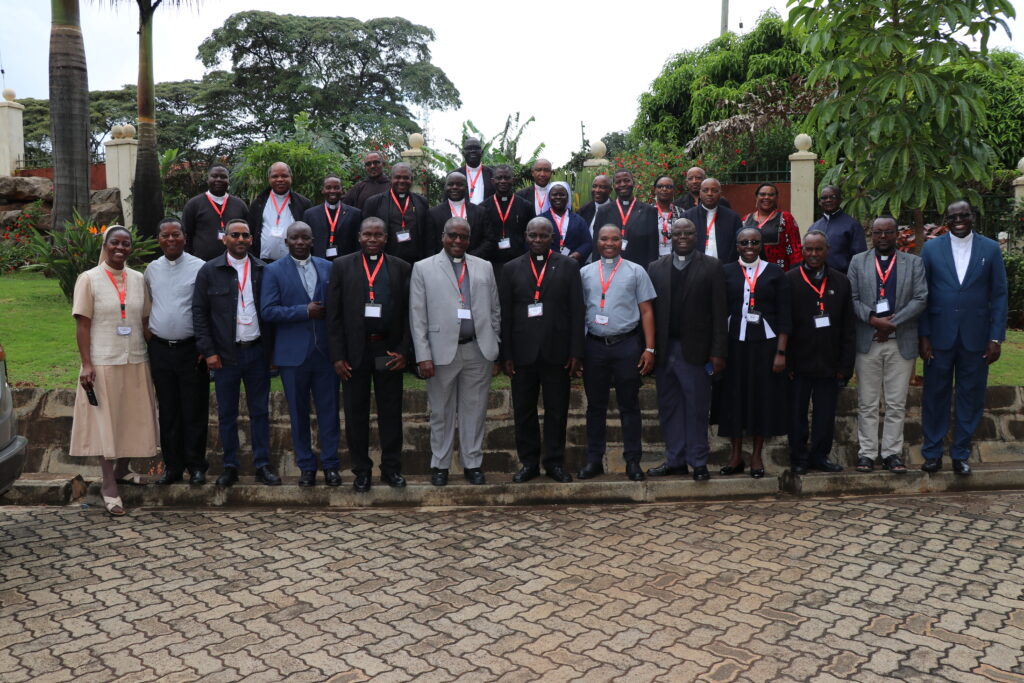
According to Fr. Makunde, who has been at the helm of the AMECEA Secretariat since 2018, this workshop for the National priests’ leadership from the nine countries in the region is the first of its kind in recent history, convened to reflect on the priests’ shared mission.
“Our presence here is not accidental,” Fr. Makunde remarked to about 23 priests at the workshop, noting that while national contexts differ, the pastoral challenges across the region often transcend boundaries.
 The three-day workshop, themed “Servant Leadership for a Synodal Church,” draws on a long-standing vision within the African Church. Fr. Makunde recalled the 1970 AMECEA Plenary Assembly in Lusaka, where bishops emphasized that a priest must not be a “distant authority figure but a shepherd intimately rooted in the lives of his people and listening to them.”
He further quoted the Post-synodal Apostolic Exhortation Pastores Dabo Vobis, which focused on the Bishops, clergy, and the faithful on the formation of priests in the circumstances of the present day, and noted that this document reminds priests that they are called to be a “living image of Jesus Christ, the Head and Shepherd,” and are configured to Christ through self-giving service rather than domination.
The Apostolic Exhortation written by Pope (Saint) John Paul 11, emphasizes further the ned for the priests to be open to the Holy Spirit to discover the tendencies of the contemporary society, its deepest spiritual needs, and the most concrete task and method to adopt to adequately respond to human expectations.
The Tanzanian cleric also cited the Synodality Final Document, which invites the Church to rediscover journeying together as its primary way of serving.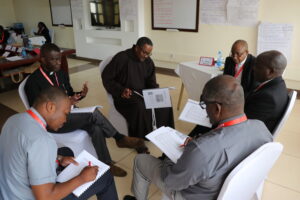
Fr. Makunde cautioned the participants against treating the workshop as a mere academic exercise and stressed that the gathering is not simply about acquiring new ideas to be shelved, but about a spiritual renewal that reshapes how priests perceive their identity.
“A synodal Church is a Church that listens, that walks together,” he stated, calling for a transition from isolation to collaboration and from speaking alone to listening attentively.
He appreciated facilitators from Tangaza University and the Catholic University of Eastern Africa (CUEA), as well as the United States Conference of Catholic Bishops (USCCB), for the financial support.