TANZANIA: Catholic Church Schools in Tanzania Strengthen Efforts to Keep Pace with Education Reforms
By Dalphina Rubyema
The Education Department of the Tanzania Episcopal Conference (TEC) has held its annual meeting, bringing together Diocesan Education Secretaries from across the country. Among other issues, the participants held in-depth discussions on the future of education in Church-run schools, emphasizing the need to align with changes in the national curriculum and education policy while preserving Catholic values.
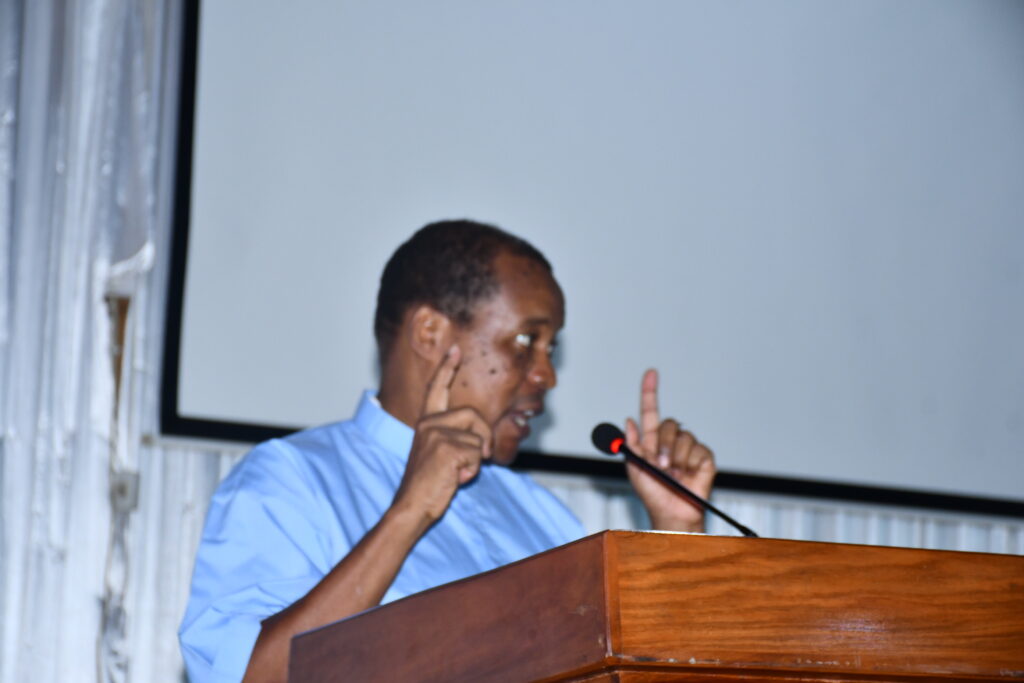
Opening the meeting, TEC Secretary General Fr. Charles Kitima emphasized that education provided by Church schools is a strategic pillar aimed at restoring a foundation that nurtures the human person intellectually, spiritually, and socially, as originally envisioned by the bishops when they established the education system in 1925.
“The history of the Catholic Church in education in Tanzania was given special attention in this discussion. Since 1925, the bishops have resolved that education should be a top priority in the Church’s mission,” Fr. Kitima said.
He continued, “Through institutions initially known as bush schools and later middle schools, the Church built a strong educational foundation that focused not only on knowledge but also on moral and faith formation. This foundation has produced many institutions that have significantly contributed to national development.”
Currently, the country is undergoing major policy reforms following the Education and Training Policy of 2014 (2023 Edition). The government aims to strengthen curricula that emphasize skills, entrepreneurship, and the use of Information and Communication Technology (ICT) from pre-primary to higher education, without neglecting academic subjects. To achieve this, the policy introduces two main pathways: vocational education (technical skills) and academic education.
These reforms also introduce a new structure whereby primary education will end at Standard Six, while lower secondary education (Forms One to Four) will be compulsory. In other words, compulsory education will now run from pre-primary to Form Four.
These changes require significant investment in infrastructure and human resources—an issue widely discussed during the meeting. Particular attention was given to preparing specialized classrooms for vocational training. However, financial constraints remain a major challenge, especially as Church secondary schools are experiencing declining student enrolment, with many students opting for government schools under the “free education” system. Additionally, some teachers are leaving Church schools to join government institutions.
In his presentation on “Analysis and Comparison Towards Effective Collaboration Between Catholic Schools and the Government in Tanzania,” Fr. Augustine Selem noted that to ensure effective curriculum reforms, the Church must engage in dialogue with the government to jointly address these challenges, whether through the provision of experts or support for infrastructure development.
“There must be open dialogue between the Church and the government to highlight the Church’s contribution in this sector. The government, through Public-Private Partnership (PPP) frameworks, should approach this positively, as transparency, effective communication, and institutional trust are essential,” he said.
Supporting this view, TEC Education Secretary Sr. Joyce Mboya, CDNK, revealed that initial discussions between the Church and the government are already underway. The government has expressed interest in placing students in Church schools. However, further discussions are needed, particularly regarding the operational model, given that government education is free while Church schools require parental contributions.
Regarding holistic student formation, participants noted that the rise of Artificial Intelligence (AI) presents a new challenge. While it offers opportunities, it also opens avenues for academic dishonesty and may hinder students’ critical thinking, as some tend to rely on instant answers instead of engaging with textbooks and supplementary reading materials.
ICT expert Mr. Ephrahimu Sula from Shule Soft Africa, in his presentation on AI, noted that the technology is unavoidable. He emphasized that to address its challenges positively, the Church must develop policies and guidelines to ensure ethical use.
He also advised Church schools to train teachers in AI to build their capacity, which would help them guide students effectively and detect misuse of the technology.
During the open discussion, several challenges were highlighted, including a shortage of religious education teachers and a lack of accurate student data in some schools. This has contributed to reduced financial contributions to the TEC Education Department, which are based on student enrollment. Participants also emphasized the importance of strengthening the Catholic Professionals Association (CPT) at the diocesan level to enable lay professionals to contribute their expertise to the Church.
Closing the meeting, the Chairman of the TEC Education Department and Bishop of the Catholic Diocese of Geita, the Most Rev. Flavian Kassala, encouraged the diocesan education secretaries with these words:
“Let us not be afraid. The Church’s role in providing education will not decline. What is needed is to put into practice what has been discussed. Above all, remember that each of you, in your respective dioceses, is an advisor to the bishop on education matters. Therefore, fulfill your responsibilities diligently.”
He further stressed that any partnership with the government must uphold the principles and values of Catholic education, while clearly defining the system to be used especially regarding the payment of fees for students who may be enrolled in Church schools under such agreements.
On strengthening CPT, he noted that the responsibility lies at the diocesan level, urging education secretaries to work closely with their bishops to enhance its effectiveness.
“I have heard concerns about some schools not being transparent in submitting student contributions to the TEC Education Department. Established procedures must be followed. There is no justification for underreporting student numbers to reduce contributions. Everyone should feel responsible for supporting the Education Department, as it plays a vital role in coordinating education activities,” he emphasized.
He concluded by urging schools to continue improving infrastructure and human resources to meet government requirements, while remaining steadfast in preserving the identity of Catholic education and addressing contemporary challenges. As of December 2025, the Church had 331 pre-primary schools, 330 primary schools, 319 secondary schools, 60 vocational training centers, and 31 colleges and universities.