SOUTH SUDAN: Christ at the Center: South Sudan’s Bishop Sets Tone for Church Strategic Plan Implementation
By Ginaba Lino
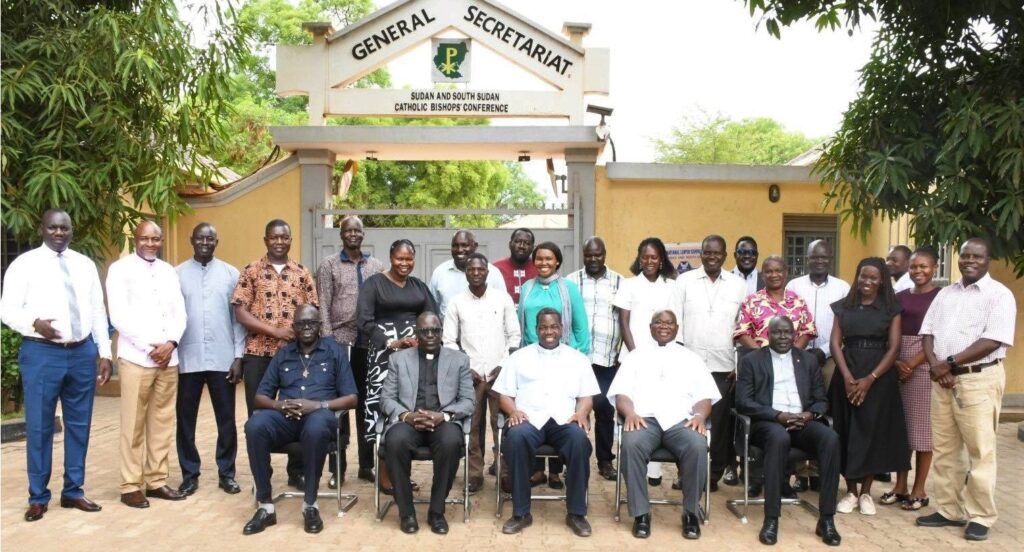
Church leaders and staff of the Sudan and South Sudan Catholic Bishops’ Conference (SSCBC) have been urged to anchor their mission in Christ as they implement a new Three-Year Strategic Plan aimed at strengthening the institution and enhancing its service to the faithful.
The call was made by Bishop Barani Eduardo Hiiboro Kussala of the Catholic Diocese of Tombura-Yambio during the validation workshop and official launching process of the Strategic Plan, an important milestone for the Conference.
In his address, Bishop Hiiboro emphasized that Christ must remain the foundation of all Church activities, reminding participants that their work is first and foremost a spiritual calling. “Jesus is the sole reason why we are here. Without Him, we cannot do anything,” he said.
He encouraged those serving within the Bishops’ Conference to deepen their relationship with God, especially during the Lenten season, noting that faith guides in moments of difficulty. “When things do not go well, we must fall back on Christ. He helps us to respond to challenges and gives meaning to our mission,” he added.
The Bishop further underscored the importance of humility and personal conduct, stating that working for the Church demands a high standard of character. “When you go out and say you are working for the Catholic Bishops’ Conference, it calls for humility. You are representing Christ, and your behavior must reflect that,” he said.
He reminded participants that their service is not merely professional but deeply spiritual, describing all staff as being “employed by Christ” and called to follow His example in addressing challenges, serving others, and promoting peace.
Turning to institutional development, Bishop Hiiboro highlighted the importance of identity within the Bishops’ Conference, describing it as a driving force for commitment and effectiveness. He encouraged staff to take personal responsibility for understanding the mission, vision, and values of the institution.
“Identity gives energy,” he said. “You must know what this institution stands for. You must be able to explain it anywhere, at any time, with confidence and knowledge.”
He compared this sense of identity to other institutions where employees strongly identify with their organizations, noting that members of the Church must equally embrace and promote the identity of the Bishops’ Conference.
The Bishop commended the Secretariat for organizing the workshop and creating space for dialogue, learning, and reflection. He noted that such engagements are essential in strengthening institutional capacity and ensuring that all staff are aligned with the Conference’s mission.
On teamwork, Bishop Hiiboro called for unity and mutual support among staff, acknowledging that individuals come from diverse backgrounds and possess different skills. He stressed that shared vision and collaboration are key to achieving institutional goals.
“For an institution to be strong, we must work together and support one another,” he said. “Speak well of your colleagues. Encourage each other. That is how we build strong relationships and a healthy working environment.”
He further advised staff to internalize the Conference’s vision, mission, and core values by making them visible and practical within their respective departments. “Write them, display them, and live them,” he urged.
Addressing administrative structures, the Bishop emphasized the critical role of human resource management and monitoring systems in ensuring accountability and organizational growth. He described human resource personnel as central to institutional stability, noting that they handle key issues affecting staff welfare and performance.
He also pointed to the importance of monitoring and evaluation systems in maintaining standards and identifying gaps in implementation. “These structures help us to know what is working and where improvement is needed,” he said.
On organizational culture, Bishop Hiiboro stressed the need for staff to respect and adhere to the established structures of the Bishops’ Conference, rather than comparing them with external institutions. He noted that every institution has its own identity and way of functioning.
“This is our institution, and this is our culture. We must follow it and make it work for us,” he said, while also encouraging openness to learning and improvement through dialogue with experts and partners.
The Bishop also highlighted the importance of engaging development partners while maintaining local ownership of the Church’s mission. He stressed that the Conference must define its priorities and guide its own development path.
“We are the ones living our mission. Partners should support us, but we must remain in the lead,” he emphasized.
Reflecting on the Church’s broader mission, Bishop Hiiboro spoke on the concept of integral human development, describing it as central to the work of the Church. He explained that the Church’s response to human needs is rooted in charity and love, but also extends to long-term development aimed at addressing the root causes of poverty and suffering.
He noted that efforts in areas such as justice and peace, health, and education are part of this holistic approach to human development, and called for continued growth in these sectors within the Conference.
In addition, the Bishop urged the Secretariat to strengthen its communication and media engagement, noting that the Church must effectively share its message with the wider public, especially young people.
“The young people have moved to the digital space. We must follow them there with the message of the Church,” he said. He encouraged the use of radio, social media, and print platforms to disseminate pastoral messages and promote reflection among the faithful.
As the Church approaches the Easter season, Bishop Hiiboro called on participants to remain hopeful and resilient, drawing inspiration from the resurrection of Christ. “Behind the cross, there is life,” he said. “Even when resources are limited, that is not the end. God will provide and guide our mission forward.”
He concluded by recommending further refinement of the Strategic Plan before its formal public launch, suggesting that it be finalized and officially presented by the leadership of the Bishops’ Conference.
The Three-Year Strategic Plan is expected to serve as a roadmap for strengthening the Sudan and South Sudan Catholic Bishops’ Conference, enhancing coordination, and promoting the Church’s mission of evangelization and integral human development across the region.