TANZANIA: Church Plans to Strengthen the Faithful Through Deeper Catechesis
Dalphina Rubyema
In response to the challenges currently facing the Catholic Church, Church leaders have emphasized the need to strengthen catechetical formation among the faithful to build a strong foundation of faith and protect believers from being misled or manipulated by those who do not have the Church’s best interests at heart.
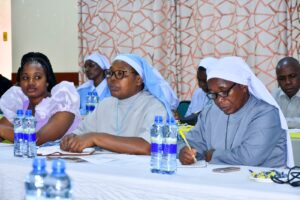
This was discussed during the Ordinary Catechetical Meeting that brought together Directors of Catechetical Departments and their advisors from various dioceses across the country. The meeting was organized by the Catechetical Department of the Tanzania Episcopal Conference (TEC) and also involved the Hannah Mission.
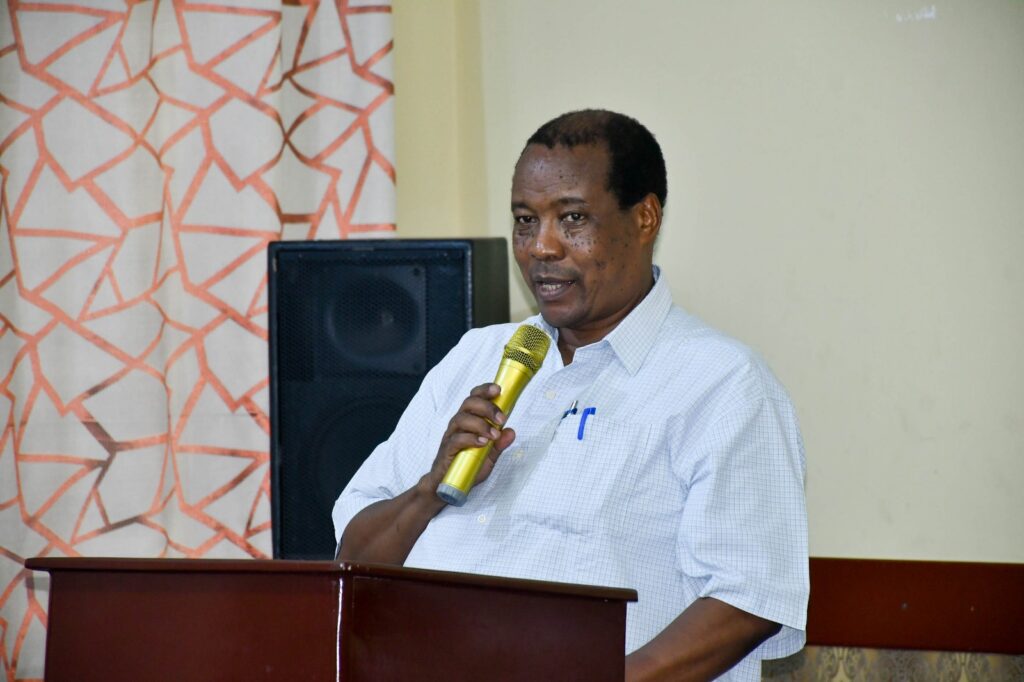
Opening the meeting, the Secretary General of the Tanzania Episcopal Conference, Fr. Charles Kitima, said there is a great need to deepen the seed of faith among believers so that they may understand the value of the sacraments they have received, especially Baptism and Confirmation, which form the foundation of Christian life.
He noted that catechists are responsible for providing in-depth catechesis to help the faithful love and defend their Church, and to avoid being lured or manipulated into betraying it.
“Believers must understand the value of their baptismal certificates and other sacraments. They should not allow themselves to be used in any way to betray the Church. The mission of catechists is to provide deep catechesis. However, this mission will be more successful if the Church recognizes and values the important contribution of catechists, many of whom serve voluntarily,” said Fr. Kitima.
He further emphasized that catechetical ministry must keep pace with society’s growth. He noted that thousands of children are born each year, making it necessary for the Church to make deliberate efforts to reach them early with the message of the Risen Christ so that they may eventually receive Baptism and grow in the Christian faith.
Fr. Kitima also stressed the importance of strengthening Small Christian Communities (SCCs) as an effective means of nurturing the Catholic faith while preserving positive cultural values in society.
“In many communities, the culture of people gathering and sharing life is gradually disappearing. Through Small Christian Communities, we continue to build the Church as a family while promoting both social and spiritual values,” he said.
He added that TEC is ready to collaborate with dioceses in promoting the vocation of catechists through the Church’s Five-Year Strategic Plan. One of the proposals, he said, is to involve retired Catholic teachers in teaching religious education in schools, which could help address the shortage of teachers for the subject.
Meanwhile, the Chairman of the TEC Catechetical Department and Bishop of the Catholic Diocese of Bagamoyo, Bishop Stephano Musomba, OSA, urged catechists to recognize that they are sent to nurture believers’ faith so they can proclaim Christ to others.
He said the mission of catechists is to help form the consciences of the faithful so that they may live out and defend their faith rather than allowing themselves to be used in ways that could harm the Church.
“Our responsibility is to help form the consciences of believers so that they can protect their faith. Catholics must recognize the value of their Baptism and remain steadfast in the Church rather than wandering among the many churches that continue to emerge every day,” Bishop Musomba emphasized.
During the meeting, the Head of the TEC Catechetical Department, Fr. Liston Lukoo, presented a report on the implementation of resolutions from a similar meeting held last year. He noted that several challenges continue to affect the teaching of religious education in schools, including a shortage of teachers and catechists, and instances in which Christian students are sometimes compelled to study Islamic religious education because the subject contributes to higher examination scores.
However, he explained that several dioceses have begun addressing this challenge by involving catechists, religious sisters, and priests in teaching religious education in schools. In addition, Catholic teachers working in these schools are being equipped with the necessary training through special guidelines for teaching the subject.
 He also said that efforts are underway to develop a national guideline for teaching religious education to harmonize catechetical instruction across all dioceses in the country.
Another challenge raised during the meeting was that some institutions and groups from other denominations use social assistance as a way to attract Catholic believers, particularly poor families, by offering support such as food, education, and other services.
Speaking on this issue, the Coordinator of the Hannah Mission, Ms. Gloria Kasilo, said the challenge had been identified during pastoral visits conducted in some dioceses in collaboration with the TEC Catechetical Department.
In response, Fr. Lukoo emphasized that the most effective solution is to strengthen catechetical teaching in order to build a firm foundation of faith among believers.
“The more we reduce the pace of catechetical teaching, the more we risk weakening the Catholic faith. We may build large churches, but without religious instruction, those churches may remain empty in the future,” he said.
The Hannah Mission continues to play an important role in supporting the catechetical apostolate by assisting catechists, including sponsoring their training and motivating them in their ministry.
Meanwhile, preparations are underway for the National Congress of Catechists scheduled for 2026, following diocesan-level congresses held in 2024 and regional congresses conducted in 2025.
Participants at the meeting emphasized the importance of continuing to strengthen the ministry of catechists by providing ongoing training, motivation, and greater involvement in pastoral activities, including pilgrimages both within and outside the country, in order to enhance their effectiveness in evangelization.