AMECEA: New Synodality Formation Manual, a “Living Pastoral Instrument” for AMECEA Church
Sr. Jecinter Antoinette Okoth, FSSA
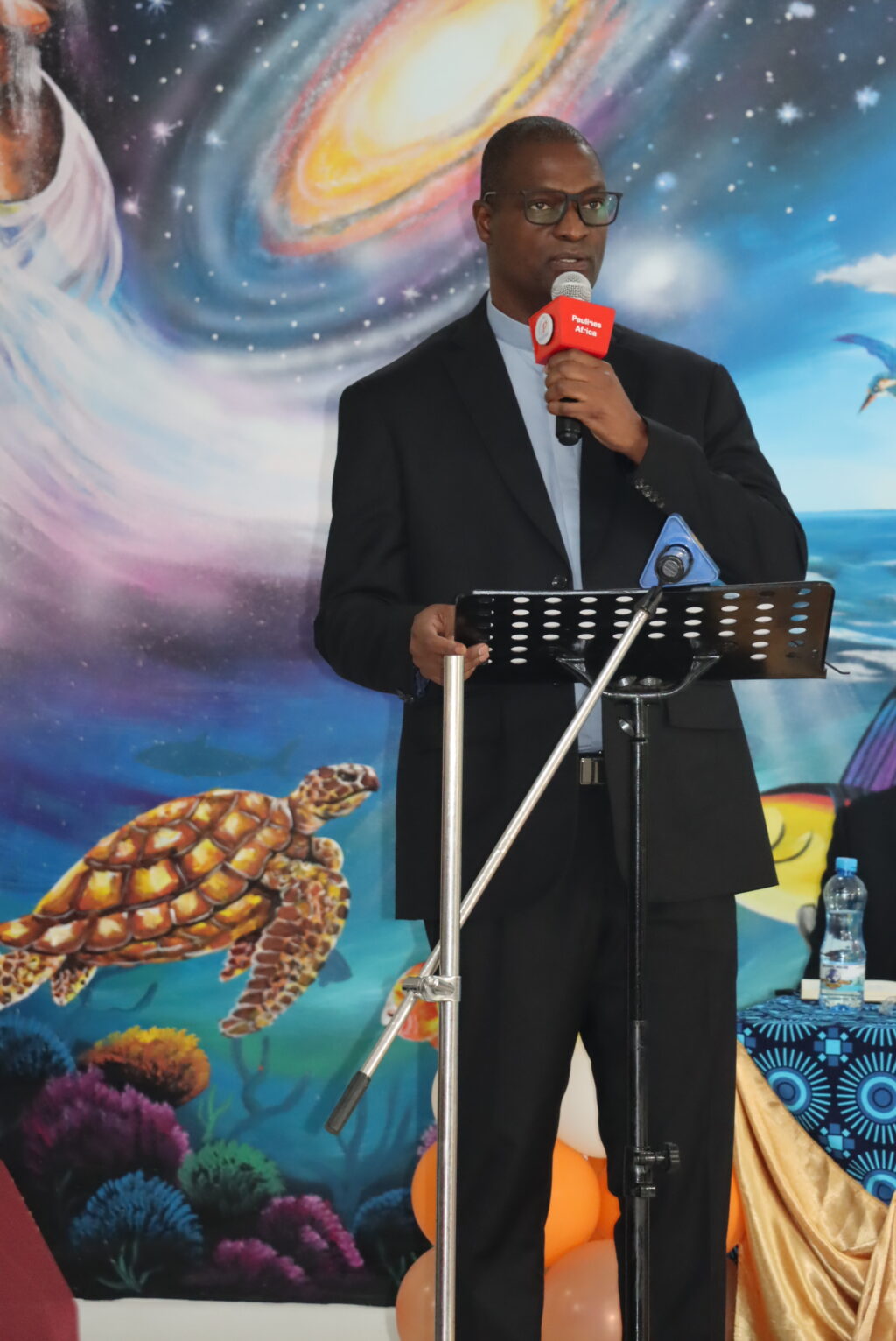
On Thursday, March 12, the Association of Member Episcopal Conferences in Eastern Africa (AMECEA) unveiled a new Synodal Formation Manual, which the AMECEA’s coordinator of the Social Communications Department described as a “living pastoral instrument” that draws on Africa’s deep-rooted tradition of communal discernment to advance the Church’s synodal journey.
In his address to approximately 100 participants gathered onsite at Donum Dei, Roussel House, Nairobi, and others who followed the proceedings virtually, Fr. Andrew Kaufa underscored that the manual sets itself apart from other formation resources.
The Synodality manual, “does not import a foreign methodology and impose it on African soil. It grows from that soil. Its style is deliberately participatory and contextual. Each of its seven chapters moves the reader from theological understanding to practical action, from grasping the heart of communion, participation, and mission to actually practising the Conversation in the Spirit methodology, to converting relationships, processes, and bonds at every level of ecclesial life,” he explained.
According to Fr. Kaufa in his message, synodality is not a new concept on the continent, since the Church in Eastern Africa has long practised communal discernment through diocesan and parish structures and through the seven-step Bible-sharing rooted in SCCs. Thus, the manual names what Africa already knows, consecrates it with Gospel language, and deploys it within the formal life of the Church.
The seven-chapter book, whose audience includes the bishops and catechists, parish councils, and Small Christian Communities (SCCs), youth ministers, and lay leaders, bridges the gap between theology and practice for believers at every level of the Church.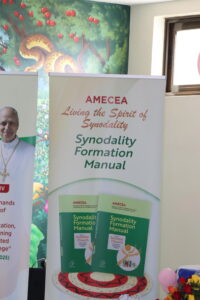
Citing paragraph 36 of the Final Document on Synodality, which calls for the implementation phase to “be taken as a matter of urgency,” the member of the congregation of Missionaries of the Company of Mary (SMM) called on participants to pause and give thanks before looking ahead to the work of implementation.
He said, “The temptation in implementation is always to look ahead, but the Spirit also asks us to pause and give thanks for what is already growing.
Additionally, he appealed that the manual should not remain shelved in conference rooms or parish libraries. Rather, dioceses, parishes, SCCs, and schools of theology should make use of the manual. Thus, the implementation should be understood not as a project ending with a report, but as, in the manual’s own words, “a living process of conversion of local Churches, one that ends with a renewed People of God.”
Cognizant that the Church in Eastern Africa has always walked together, as proven by the SCCs, and modelled by the martyrs, Fr. Kaufa said, “Let us go from here not merely inspired, but formed and not merely formed, but sent. Let us walk together.”