VATICAN: Church Study Group Identifies Five Priorities for Digital Mission
Sr. Jecinter Antoinette Okoth, FSSA
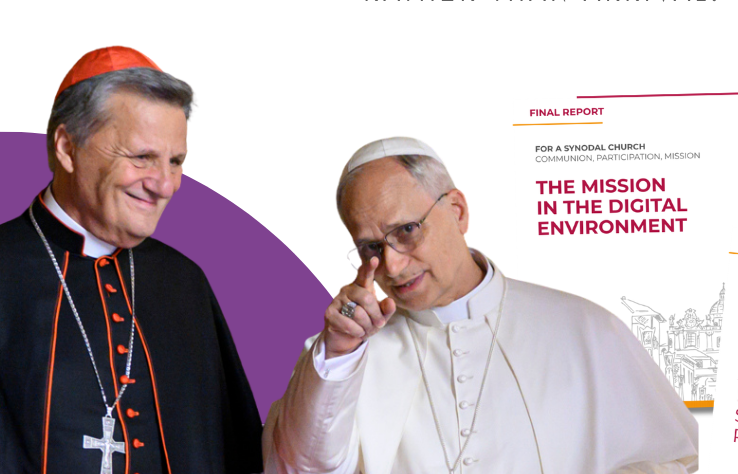
A Vatican synodal body tasked with examining how the Church carries out its mission online has released a report outlining five key priorities to guide the Church’s presence and witness in the digital world.
Study group three is one of the ten Synod on Synodality groups created in 2024 after the first session of the XVI Ordinary General Assembly of the Synod of Bishops, to examine thematic areas that emerged from the people of God during the consultation and listening phase.
The group was specifically tasked with translating the Synod’s message ‘that digital culture is an important part of the Church’s mission today and a new area for evangelization’ into practical pastoral guidelines.
In their report, the study group of experts, asked to reflect more deeply on the raised issue, highlighted that “The digital environment is not merely a set of tools to be mastered but a culture.”
In this way, they noted that the digital environment must be understood as a full culture in its own right with its own languages, relationships, and modes of community. This, therefore, reframes how the Church approaches digital engagement, and rather than simply posting content online, the Church is called to understand the digital life the way missionaries have historically immersed themselves in foreign cultures.
The second recommendation pointed out “Digital engagement as a social mission.” In their explanation that the report is the fruit of an extensive synodal consultation, members of the study group stressed that people genuinely search for God and express deep spiritual needs online.
Thus, digital spaces can be places of authentic human connection and even an expression of the Church’s preferential option for the poor, giving voice to the marginalised in traditional Church settings.
Speaking about digital culture that requires intentionality, formation, and a missionary spirit, the report narrates that the way in which missionaries throughout history have learned languages and customs while maintaining the integrity of the Gospel, all the baptized also need genuine formation to engage the digital world faithfully. Hence, the digital mission is not optional for “digital experts” but for the entire Church.
The fourth recommendation highlighted that digital engagement, at its best, naturally reflects the key synodal values of listening, participation, and shared responsibility. According to experts who have been working silently for over a year, the internet makes it possible to hear diverse voices from across geography and backgrounds, including those rarely heard. The Group sees digital culture as ‘potentially reflecting the Church’s own identity as a network of networks, a unity in diversity.’
Even though the digital environment can enable global connections, the report revealed, “It can also enable dehumanization.”
“It presents great risks, and is shaped through algorithms that can isolate us in echo chambers and manipulate us; by business models that monetize our attention and monitor our actions; and by dynamics that foster polarization rather than communion, and can drive nihilism and violence,” the report reads in parts.
It added, “This is why in the digital age we are called to live our faith maturely and prayerfully in face-to-face communities, nourished by the sacraments, and to foster in-person and digital interactions which respect human dignity, promote authentic encounter, and witness to the truth in love.”
Citing Pope Leo XIV’s warning on faith maturity, the report “a faith discovered only in digital spaces risks remaining ‘disembodied,’ never rooted in real relationships or the life of the Church, and can leave individuals’ alone with themselves’ in algorithm-shaped isolation.”
Although the group identified five priorities as a way forward, the report stressed that the findings are “preliminary,” as technology continues to evolve.
“It is important to acknowledge from the start that even with this broad consultation, our conclusions are preliminary,” the report reads in parts and continues, “The Church has been engaged in the digital environment from its beginning, yet fostering this engagement across all levels of the Church takes time. As digital technology continues to evolve, the Church’s discernment of how to live her mission remains an ongoing journey rather than a finished task.”
The document, which is one of the two final reports published by the General Secretariat of the Synod on Thursday, March 3, marks an important step in the Church’s effort to understand and engage with the digital age, not only as a communication challenge, but as a real cultural space and field for mission.