ETHIOPIA: St. Luke’s Catholic Hospital Celebrates 23rd Graduation in Ethiopia
Habtamu Abrdew Beture
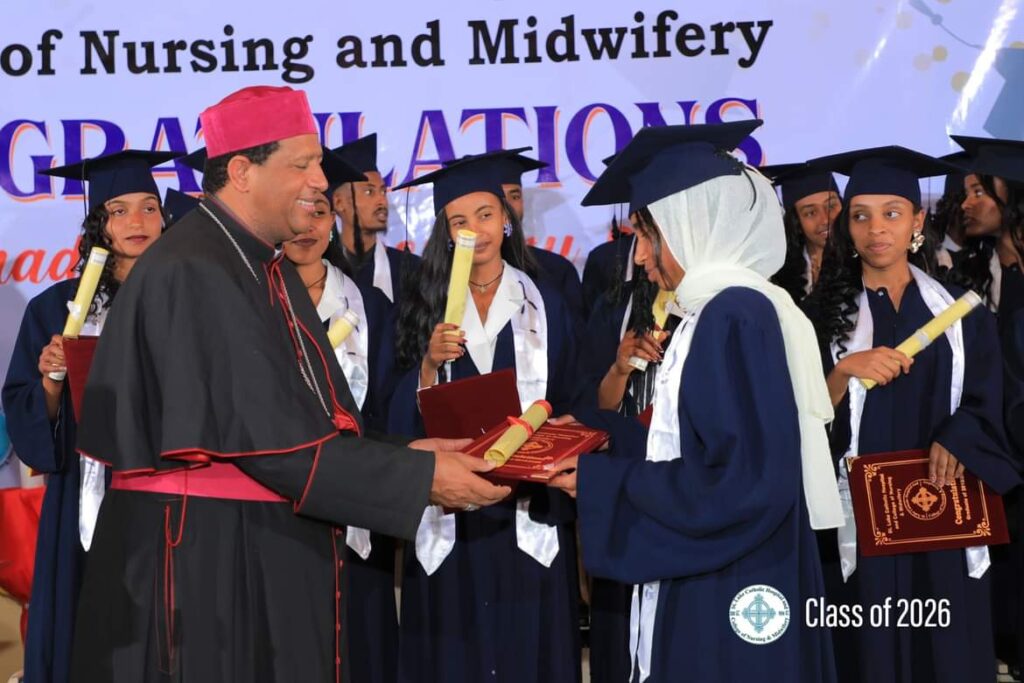
St. Luke’s Catholic Hospital and College of Nursing and Midwifery, a premier healthcare institution under the Catholic Eparchy of Emdibir, proudly celebrated the graduation of its 23rd cohort of nursing and midwifery students. The ceremony, held at the college campus, saw 50 health professionals join the ranks of Ethiopia’s frontline medical workers. The college successfully graduated 50 students, 28 Nurses and 22 Midwives this year.
Addressing the graduates, Sister Anna Christi, General Manager of St. Luke’s Hospital, expressed her profound joy and congratulated the students for their perseverance. The ceremony was presided over by His Excellency Abune Lukas, Bishop of the Emdibir Diocese and Chairman of the College Board.
“You are not merely entering a profession; you are being deployed on a mission,” Bishop Lukas told the graduates. He emphasized that the calling to save lives is a sacred duty, extending his gratitude to the faculty, government partners, and families who supported the students’ journey.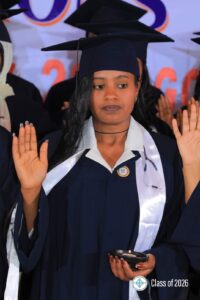
While Catholics make up less than 2% of Ethiopia’s population, the Church’s socio-economic footprint is disproportionately vast, making it the second-largest provider of healthcare and education in the country, trailing only the federal government.
Since its founding in 2000, St. Luke’s has been a beacon of medical stability. The numbers speak to its vital role: Total Graduates to Date: 970 health professionals (480 nurses, 288 midwives, and 202 specialized practitioners. Current Enrollment: 139 students.
The institution is currently collaborating with the Ethiopian Catholic University (ECUSTA) to transition its nursing and midwifery programs into full degree offerings.
By prioritizing midwifery, the Church directly addresses Ethiopia’s goal of reducing maternal mortality. Catholic Church facilities are often preferred by local communities due to their reputation for “Integral Human Development”—treating the patient’s physical and spiritual needs simultaneously. Many Catholic facilities are located in remote areas where government services are sparse. They serve as “religious infrastructure,” providing stability in regions facing economic or environmental hardship. Catholic schools and hospitals are renowned in Ethiopia for high standards and discipline, often producing the nation’s top-performing students and most dedicated clinicians.
The graduation ceremony saw a diverse turnout, including government officials and community elders, highlighting the strong public-private-church partnership. As St. Luke’s looks toward its future as a degree-granting institution, it remains a testament to the Church’s commitment to “saving the whole person,” ensuring that the light of the Gospel is reflected through the healing hands of its graduates.