AMECEA: Safeguarding Conference Ends With Call for Action Beyond Policy
Sr. Jecinter Antoinette Okoth, FSSA
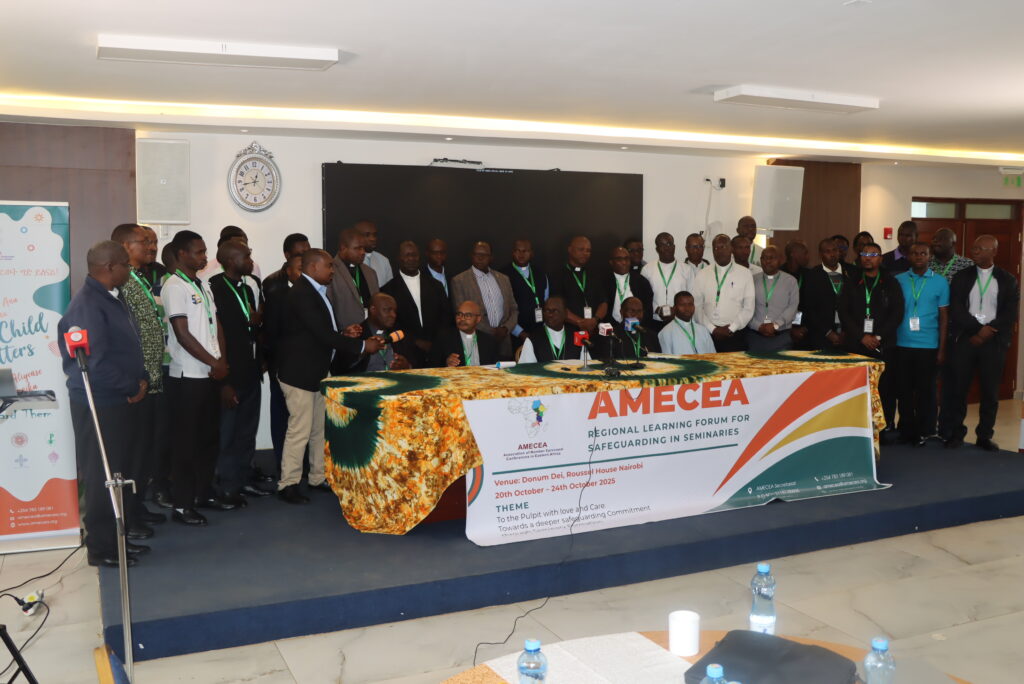
The safeguarding conference, organized by the Association of Member Episcopal Conferences in Eastern Africa (AMECEA) safeguarding desk, wrapped up its first-ever regional learning forum on safeguarding in seminaries with a powerful commitment to move beyond written policies to practical, day-to-day action.
The conference, held from October 20th to 24th, 2025, under the theme “To the Pulpit with Love and Care: towards a Deeper Safeguarding Commitment Through Seminary Formation,” concluded that while many dioceses and national conferences have developed safeguarding policies, implementation remains the critical gap.
The communique was issued on Thursday, October 23, after the three-day conference, and read by Rt. Rev. Alex Lodiong Sakor, Bishop of the Catholic Diocese of Yei, South Sudan, emphasized that safeguarding must not be viewed as an administrative task for a few officers, but rather a “personal responsibility exemplified in our day-to-day ethos, values, and ways of life.”
The participants, comprising Bishops, Clergy, Religious, Seminarians, and Laity, affirmed in their message that the Church remains a beacon of hope and must not relent in its mission to protect the vulnerable.
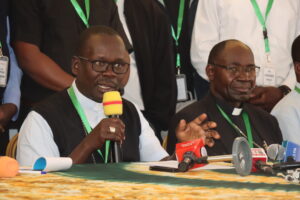
Bishop of the Catholic Diocese of Yei,
South Sudan during press release on
Thursday, October 23, 2025
Acknowledging that the Church has “at times fallen short of the expectations and failed to live up to her prophetic call to be a haven and a first responder in instances of abuse,” the delegates focused on producing future priests who have a foundational, internalized commitment to safeguarding, ensuring the safety and well-being of all, especially children and vulnerable adults.
To ensure a cohesive and responsible culture, the statement shared with members of the Catholic media houses called for national conferences and for dioceses to harmonize policies and enhance accountability structures for safeguarding.
Furthermore, the forum urged all seminaries to embrace safeguarding as an integral part of vocational discernment and preparation, integrating it into the formal, non-formal, and informal dimensions of the curriculum; a process known as mainstreaming safeguarding.
To support this shift, the delegates stressed in their Thursday message the need for capacity-building to ensure that all formators are well-grounded in safeguarding issues, fostering openness and dialogue with seminarians.
The emotional well-being of candidates, and the commitment to the journey with seminarians to help them “confront their past traumas,” were also highlighted to guide them toward healing and ensure their physical, mental, emotional, and social well-being is cared for.
The conference further recommended the establishment of an independent safeguarding desk for every seminary, with a reporting mandate to the national conference, to ensure external oversight, enhance listening, and promote safeguarding work.