AMECEA: National Seminary Formator Urges Shared Responsibility in Safeguarding
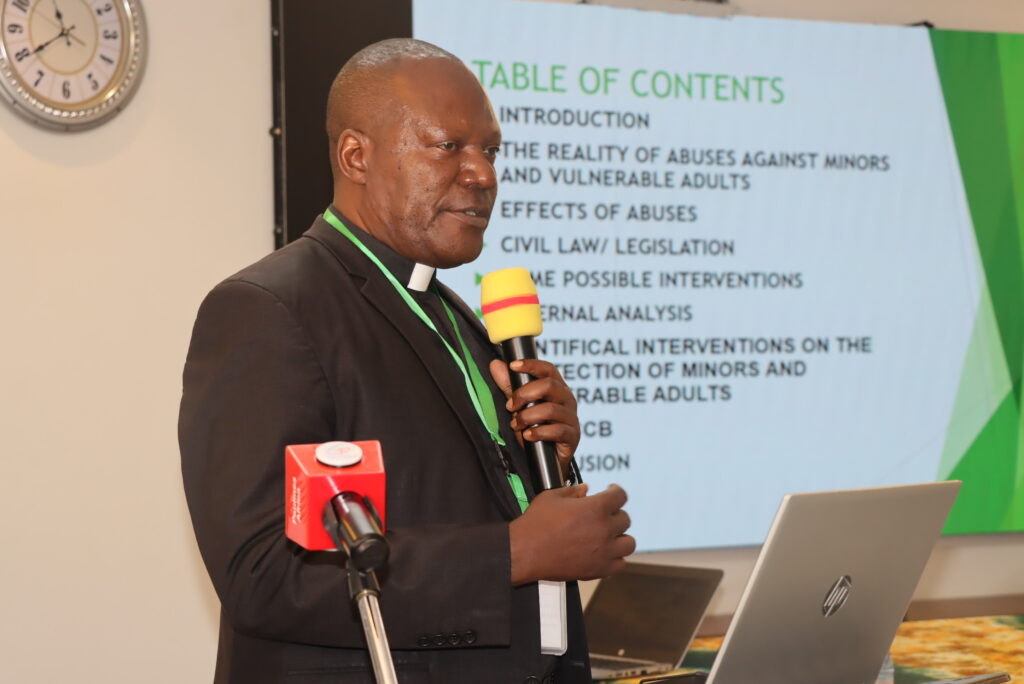
Fr. Charles Oloo K'Ochiel Vice Rector and Dean of students at St. Thomas Aquinas Major Seminary, Nairobi, Kenya
Sr. Jecinter Antoinette Okoth, FSSA
A Catholic priest has called for a collective response in addressing and healing the wounds of abuse victims, emphasizing that safeguarding minors and vulnerable adults is a shared duty that extends beyond Church structures.
On Tuesday, October 22, at a conference themed: “To the Pulpit with Love and Care: Towards a Deeper Safeguarding Commitment through Seminary Formation,” Fr. Charles Oloo K’Ochiel, the Vice Rector at St. Thomas Aquinas Major Seminary in Nairobi, Kenya urged the Church and society to “stand in solidarity with victims through compassion, justice, and sustained pastoral care.”
“The effective protection of minors and vulnerable adults, and a commitment to their human and spiritual development, are integral parts of the Gospel message,” Fr. K’Ochiel who doubles as the Dean of Students in Kenya’s national seminary said, quoting Pope Francis’ landmark Apostolic Letter Vos Estis Lux Mundi, which highlights the directive on safeguarding.
In the Pontiff’s letter issued Motu Proprio, the Holy Father acknowledged that, “The crimes of sexual abuse offend Our Lord, cause physical, psychological and spiritual damage to the victims and harm the community of the faithful.”
Hence for these phenomena never to happen again, the late Pope Francis narrated in his letter, “a continuous and profound conversion of hearts is needed, attested by concrete and effective actions that involve everyone in the Church, so that personal sanctity and moral commitment can contribute to promoting the full credibility of the Gospel message and the effectiveness of the Church’s mission.”
Fr. K’Ochiel emphasized during the regional learning forum on safeguarding in seminaries, organized by the Safeguarding Desk of the Association of Member Episcopal Conferences in Eastern Africa (AMECEA), that care for survivors must be multidimensional, encompassing medical, psychological, pastoral, and legal support. He called on families, Church institutions, and civil authorities to strengthen cooperation in prevention, reporting, and rehabilitation.
“It is everyone’s responsibility to prevent harm and ensure that vulnerable people live in safety,” the Kenyan cleric said, adding that an effective response requires education, vigilance, and empathy, and encouraged the public to report suspicions of abuse and help break the cycle of silence.
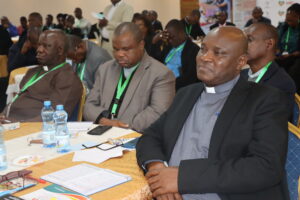
the conference
Tracing the Church’s evolving response to abuse, Fr. K’Ochiel highlighted key papal interventions from St. John Paul II’s 2001 Apostolic Letter Sacramentorum Sanctitatis Tutela, on safeguarding the sanctity of the sacraments, to Benedict XVI’s 2010 reforms that made sexual crimes against minors nearly imprescriptible, and Pope Francis’ 2019 and 2023 decrees, which reinforced transparency and accountability.
“These papal directives show that the Church is moving toward purification and conversion of heart,” the cleric said and continued, “Safeguarding therefore must not be seen as a bureaucratic process but a moral commitment to protect life and dignity.”
In his Wednesday presentation, the Dean of Students lamented the rising incidents of sexual and physical abuse globally and locally, describing it as a “betrayal of trust” that causes psychological, spiritual, and emotional damage.
Citing police statistics, he noted that in Kenya, as one of the AMECEA member countries, 6,366 cases of defilement were recorded in 2021 out of over 81,000 reported crimes, a figure he said “reveals the hidden pain many families live with.”
According to Fr. K’Ochiel, who was addressing the sub-topic “Caught in the Dilemma of Abuse: Understanding the Pains of Abuse and Loss of Trust,” many victims, particularly children and vulnerable adults, suffer in silence due to fear, shame, or the lack of supportive systems.
“The culture of secrecy and stigma around abuse must end,” he urged. “Every disclosure deserves a listening ear, a believing heart, and timely intervention.”
He explained that the effects of abuse can be lifelong, ranging from post-traumatic stress, depression, and anxiety to social isolation and loss of self-esteem, saying, “For both minors and adults, the pain of violation goes beyond the physical act; it breaks the human spirit and fractures relationships.”
In his presentation, he lauded the Kenya Conference of Catholic Bishops (KCCB) for revising its Safeguarding Policy and Procedures in 2024, which was subsequently submitted to Rome for recognition. The policy, he noted, emphasizes protection, awareness, and justice for all children and vulnerable persons.
Fr. K’Ochiel called for renewed trust within the Church and society, narrating that “Each case of sexual abuse is appalling and irreparable.”
He further echoed Pope Benedict XVI’s words of remorse, saying, “We must accompany survivors with compassion and prayer, but also through the due application of justice.”
He added that healing and reconciliation can only begin when the community embraces shared responsibility: “The protection of minors and vulnerable adults is not only a Church matter, it is a human duty that calls us all to action.”