Kenya: Clerics Free to Choose Where to Serve as Kenya’s Kapsabet Diocese is Created
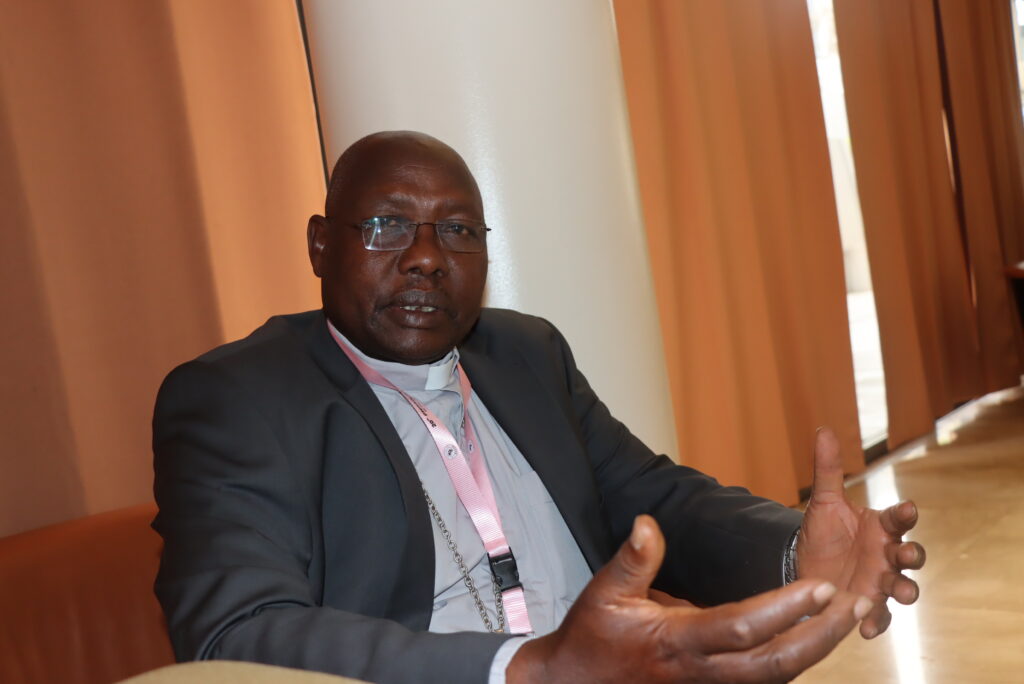
Bishop Lelei
By Sr. Jecinter Antoinette Okoth, FSSA
Following the creation of the new Diocese of Kapsabet, carved from Kenya’s Eldoret Diocese, Catholic priests from these Dioceses have been granted the freedom to choose whether to remain in Eldoret or to move to the newly established diocese that covers Nandi County.
According to the Rt. Rev. John Kiplimo Lelei, who in July 10, was appointed the founding Bishop of the new Diocese, all diocesan priests are expected to write to the Local Ordinary of Eldoret, Bishop Dominic Kimengich, declaring whether they would wish to serve in Eldoret or Kapsabet.
Bishop Lelei, who until his appointment was the Auxiliary Bishop of Eldoret Diocese and the titular Bishop of Mons in Numidia, stressed that, “This freedom is very important since the priests are part of this mission.”
The Bishop noted that if one diocese ends up with disproportionately more priests than the other, the two Bishops would agree to send some as Fidei Donum priests to balance pastoral needs.
“A Fidei Donum priest is a diocesan priest sent by their diocese to serve in another diocese, often in a mission territory or a diocese with a shortage of priests.”
Such a decision to have Fidei Donum priests, Bishop Lelei said, is meant to safeguard the spirit of service and ensure the mission of the Church remains vibrant in both dioceses.
The establishment of Kapsabet Diocese, announced by the Holy See on July 10, was a long-awaited development. It fulfils a request first made by the late Bishop Cornelius Korir of Eldoret, who had petitioned Rome to carve out a new diocese due to Eldoret’s vastness. His successor, Bishop Dominic Kimengich, pursued the request, which has now materialized.
In an Interview with AMECEA Online, Bishop Lelei acknowledged that becoming the first shepherd of Kapsabet Diocese presents both challenges and opportunities.
“This office comes with a lot of responsibilities. I am used to parish work and seminary formation, but now the responsibility is much broader. However, I see it as an honour the Holy See has given to the people of Kapsabet because of their faith, generosity, and willingness to support the Church,” he said, and emphasized that Kapsabet is a homogenous diocese, with a strong foundation of faith nurtured by early missionaries.
Asked what his priority for the Diocese would be once he is installed as the first Bishop of Kapsabet Diocese, which is set for Saturday, August 30, the Kenyan Prelate said he would wish to establish key structures such as a diocesan secretariat, a cathedral, and the bishop’s residence.
As for a start, the Bishop will reside in a renovated house built by missionaries in the 1930s, while offices will temporarily be set up in a former school building.
Beyond administration, Bishop Lelei stressed the need to deepen the people’s faith and develop self-sustainability projects.
He acknowledged past challenges, including the tragic killing of Fr. Aloys Cheruiyot Bett, which deeply affected the local community, saying, “We are people of hope. Even after that devastating incident, we gathered to celebrate Mass at the very spot of the tragedy to encourage the faithful,” he said, quoting the message of St. Paul that, “Hope does not disappoint.”
Eldoret Diocese, which is one of the oldest Dioceses in Kenya, currently serves a population of over two million people, half of whom are Catholics, spread across Uasin Gishu, Elgeyo Marakwet, and Nandi counties. It has about 200 priests
“I pray that together with the Christians, we may work as a team to build this diocese and carry forward the faith,” the Bishop concluded.