ZAMBIA: Zambia Bishops Appeal for Respect for Human Dignity
Sr. Jecinter Antoinette Okoth, FSSA
A day after the Archbishop of Lusaka, Most Rev. Alick Banda, appeared before the Drug Enforcement Commission (DEC) on Monday, September 28, the Catholic Bishops of Zambia met in an extraordinary plenary meeting and issued an appeal for respect for every human person’s dignity.
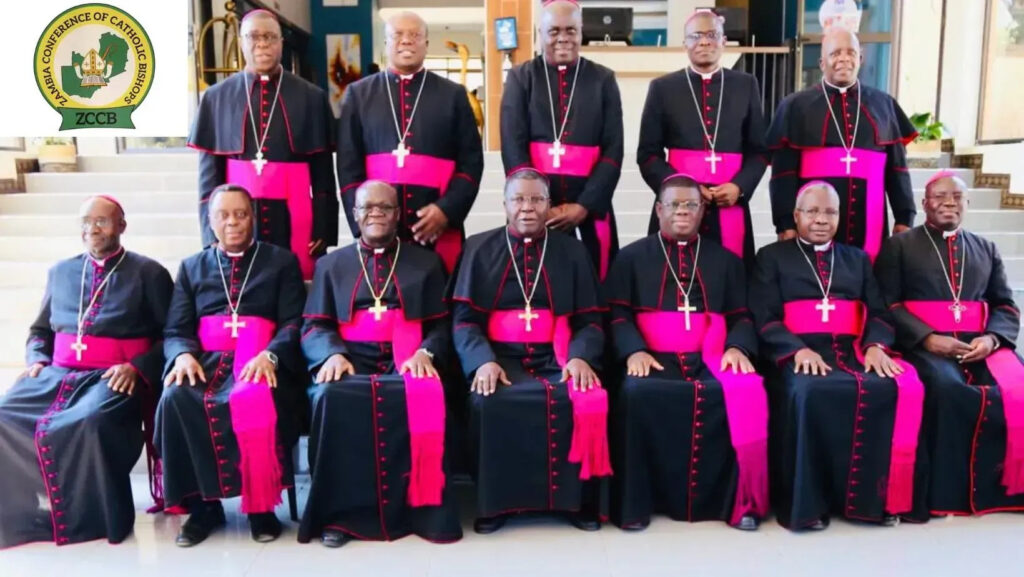
In a pastoral statement dated Wednesday, September 30, a section of the Zambia Conference of Catholic Bishops (ZCCB), including the conference’s president, Archbishop Ignatius Chama, appealed to all Zambians and people of good will for “a renewed commitment to the dignity of every human person,” declaring that “no political interest, party loyalty, ethnic identity or exercise of power can justify the violation of human dignity or the taking of innocent life.”
The Bishops’ Statement focused on the Current Situation in Zambia and, opening with Psalm 11:3, “If the foundations are destroyed, what can the righteous do?”, the bishops expressed “concern over increasing political polarisation, the manipulation of ethnic and tribal sentiments for political purposes, the fear experienced by many citizens, and the narrowing of space for freedom of expression.”
The bishops also raised concerns about the credibility and transparency of electoral processes, including the conduct and management of the 2026 General Elections, as well as restrictions on access to justice, the harassment and arrest of opposition actors, political violence and cadreism, and debates over constitutional provisions on presidential terms of office.
The Church leaders further cited “reports of arbitrary arrests and detention, the presence of military personnel in civilian spaces,” and excessive use of force, including the loss of civilian lives. “Every human life is sacred and must be protected,” they stated.
“Our purpose is not to deepen political divisions or to take sides in partisan struggles,” the bishops clarified, explaining that the Church seeks to contribute to “the protection of human dignity, the strengthening of justice and peace, the defence of truth, and the preservation of our national unity.”
Referencing the Second Vatican Council’s teaching that “the political community exists for the common good” (Gaudium et Spes, 74), the Wednesday pastoral letter reminded leaders that power “is never an end in itself; it is a responsibility entrusted for the service of others.”
Among their appeals, the bishops called for the “protection of constitutionalism, the rule of law and the independence of institutions, genuine dialogue, the protection of freedom of expression and association, and the right of every person to due process and access to justice.” They urged political leaders to place the common good above partisan interests and called on citizens to resist provocation and reject hatred, tribalism, violence and the misuse of social media.
Members of ZCCB also proposed concrete actions, including a sustained process of national dialogue, reconciliation and healing; a review of electoral processes; intensified civic education, especially among young people; and pastoral, humanitarian and legal support for those affected by violence, arbitrary detention or intimidation.
Offering a word of hope, the bishops assured Zambians that “they are not alone,” and recalled their 2004 statement, A Call to Integrity: “The nation cannot be built on lies, corruption, and intimidation, but only on truth, justice and service.”
They called on the clergy, religious, and lay faithful to gather and pray the Rosary daily for peace in the nation, especially as the Church enters the month of October, dedicated to the Holy Rosary.
“May Our Lady, Queen of Peace, come to our assistance in this time of need,” they prayed.