TANZANIA: Religious Sisters encouraged to embrace AI for the advancement of their mission

By Dalphina Rubyema
Religious Sisters from various congregations in Tanzania have been encouraged to embrace Artificial Intelligence (AI), study and understand the technology in depth so as to take advantage of the opportunities it offers for advancing their charisms and mission, as well as the mission of the Church as a whole.
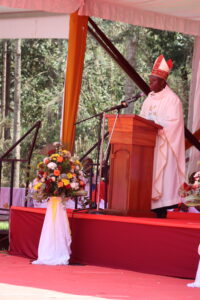
The call was made by the Secretary General of the Tanzania Episcopal Conference (TEC), Fr Charles Kitima, while opening the AI training seminar that was organised by TEC through its Social Communications Directorate which was held at the TEC headquarters.
Fr Kitima said that although religious Sisters have chosen the consecrated life as a witness to the Risen Christ, they cannot isolate themselves from science and technological developments because they are also part of the contemporary world.
He, however, cautioned them to make a careful and critical assessment of AI before adopting it. He said the positive aspects of the technology should be used to strengthen the mission of religious congregations and promote human dignity, without compromising Catholic teaching.
The Sisters were also encouraged to recognise that, although they profess the vow of poverty, they need to develop sound and sustainable strategies for mobilising resources to support their mission. While their vocation involves providing spiritual care, they are also called to serve vulnerable communities and families. They were therefore encouraged to use AI to expand their knowledge and skills, particularly in areas such as project writing and resource mobilisation.
The TEC Secretary General noted that the Church has already provided guidance on the ethical use of AI and encouraged the participants to learn from individuals and institutions that have successfully used technology to achieve positive results.
He said such experiences could help religious congregations and Church institutions to make informed use of AI and other emerging technologies. He also emphasised the importance of introducing knowledge and awareness of AI during the early stages of formation and preparation for future religious men and women, particularly because they belong to a generation growing up in an increasingly digital world.
“Science must always remain rooted in divine truth, and technology must serve to build the Kingdom and glorify God. AI can never take the place of God or of the human person who acts with a living conscience,” he stressed.
Fr Kitima said the Church has historically been at the forefront of defending human dignity. He referred to the social and economic challenges that emerged during the Industrial Revolution, including the exploitation of workers, low wages, poor working conditions, and the widening gap between the rich and the poor.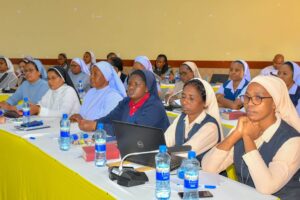
In response to these challenges, the Catholic Church developed important social teachings. On May 15, 1891, Pope Leo XIII issued the Encyclical Rerum Novarum, which addressed the condition and rights of workers and the relationship between capital and labour. The document is regarded as one of the foundations of Catholic Social Teaching and contributed significantly to the development of the Church’s engagement with social justice and workers’ rights.
Earlier, in his opening remarks, the Director of the TEC Social Communications Directorate and Deputy Secretary General of TEC, Fr Faustine Furaha, said the training had specifically targeted religious Sisters because of the important role they play both within and outside the Church.
He noted that, in addition to providing spiritual services, Sisters are actively involved in social ministries such as education and healthcare. For this reason, he said, it is increasingly important for them to understand and engage responsibly with AI in today’s rapidly changing world.
Fr Furaha said the training was conducted in line with the Church’s teaching on Artificial Intelligence, particularly the document Antiqua et Nova, which emphasises that technology must always respect human dignity and that AI cannot replace human conscience, wisdom or responsibility in decision-making.
He explained that whenever a new technology emerges, people generally go through three stages: first, fear and suspicion about its possible negative effects; second, learning and exploring its opportunities and challenges; and third, embracing and making proper use of its beneficial aspects.
However, he stressed that technology must always be used with caution, responsibility and sound moral judgement.
Fr Furaha also referred to the Church’s historical engagement with technological developments, noting how Church leaders have reflected on the impact of modern communication technologies on society, morality and human formation.
He said that despite the challenges associated with AI, the technology presents numerous opportunities for evangelisation when used responsibly. These include supporting catechetical instruction, reaching young people through social media, preparing project proposals, conducting research and holding virtual meetings through platforms such as Zoom.
Meanwhile, the Bishop of the Catholic Diocese of Bunda and Chairman of the TEC Liturgy Department, Bishop Simon Masondole, urged the participants to share the knowledge they had acquired with their respective congregations and institutions.
Speaking at the closing of the seminar, Bishop Masondole emphasised that AI should be used for the benefit of humanity and warned against allowing technology to dominate or control human life.
He encouraged the Sisters to use AI as a tool for learning and research while exercising particular caution to avoid information and content that could negatively affect their mission and values.
Bishop Masondole stressed that the Church recognises science and technology as fruits of human creativity and reminded the participants that AI itself is a product of human intelligence.
“We must not allow AI to control us because it was created by human beings, and human beings can control it. Science is a gift from God and should therefore be used wisely for the benefit of humanity, while what is harmful should be rejected,” he said.
The seminar brought together Sisters involved in healthcare, education and project development from approximately 60 of the country’s 122 religious congregations and facilitated by Dr Daniel Mfungo of Ruaha Catholic University (RUCU) in collaborations with Fr Faustine Furaha.