AMECEA: “Church Must Understand the Language of Digital Culture,” AMECEA Secretary General’s Clarion Call to Prelates
Sr. Jecinter Antoinette Okoth, FSSA
The Secretary General of the Association of Member Episcopal Conferences in Eastern Africa (AMECEA) has called upon the Bishops to step up boldly to understand the world of Artificial Intelligence (AI) and digital communication if the Church is to remain a credible and effective witness of the Gospel in the modern age.
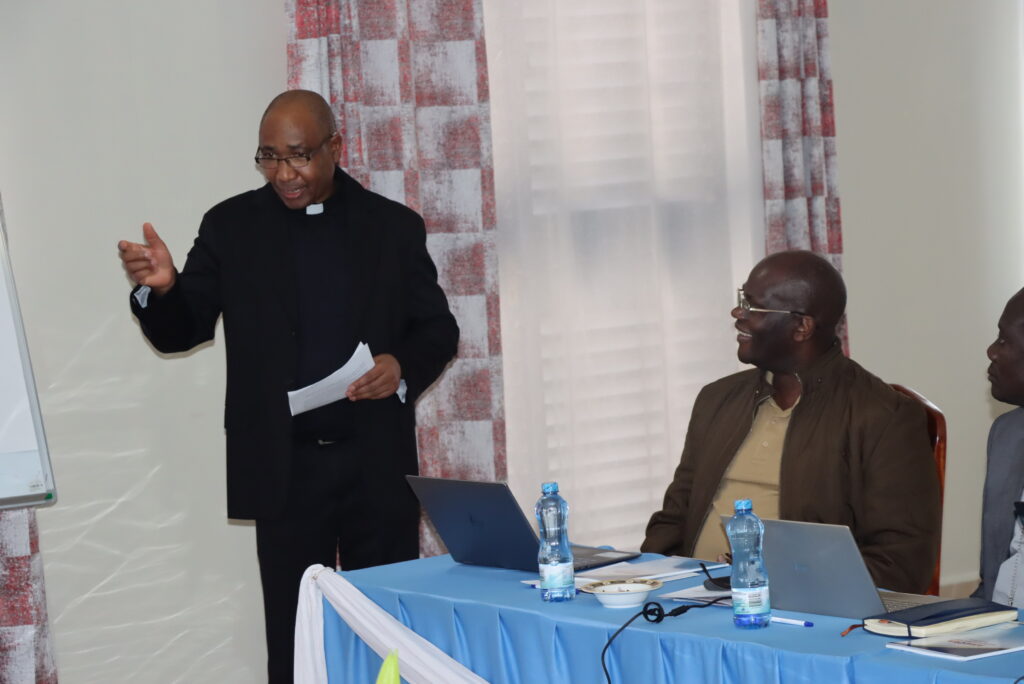
Addressing a section of Bishops from across the region during a three-day workshop at Roussel House, Donum Dei in Nairobi, Kenya, Fr. Anthony Makunde said the Church must learn to speak the language of the age in which it lives.
“We are living in a time when digital communication and artificial intelligence are transforming the way people learn, interact, and form opinions,” Fr. Makunde disclosed on Monday, March 10, at the opening of the workshop on AI and Digital Evangelization adding that, “Young people, in particular, live much of their lives within the digital environment and if the Church is to accompany them effectively, she must understand the language and dynamics of this new digital culture.”
For Fr. Makunde, this is not just a matter of keeping pace with technology, but a fundamental matter of mission, of ensuring the Church goes where the people are.
“This workshop is not simply about technology; it is about mission. It is about ensuring that the Church in the AMECEA region remains present and active where people are increasingly living their lives, within the digital world,” he narrated.
The Tanzanian cleric expounded further that the gathering of the Bishops also fulfils a specific institutional mandate given during the AMECEA Executive Board’s Ordinary Meeting last year. The Board directed the Social Communications Department to organise a comprehensive training for Bishops on communication with secular institutions, including AI.
The significance of direct engagement with the Bishops cannot be overstated, and Fr. Makunde noted, “Your presence carries great significance because the knowledge and insights gathered here will not remain personal; they will shape pastoral direction and influence the life of the entire diocese and its institutions.”
He called on the Bishops to see digital technologies and AI not as threats to be feared or to be cautiously observed, but as instruments that, when properly guided, can serve the proclamation of the Gospel in powerful new ways.
“When properly guided, these tools can become powerful instruments for proclaiming the Gospel, fostering dialogue, promoting justice and peace, and building communities of faith,” Fr. Makunde said, adding that the leadership of Church leaders is also significant in encouraging young people, seminarians, and those in formation to become knowledgeable and responsible users of digital technologies and AI.
Consequently, the AMECEA Secretary General’s call to the Bishops is grounded in a growing body of Church teaching on the ethical and pastoral dimensions of AI.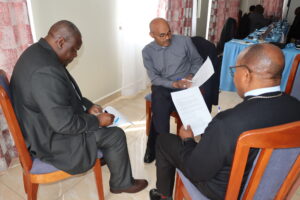
The Vatican has been consistent in enlightening the people of God about technological advancement. In his Message for the 2024 World Day of Social Communications, Pope Francis dedicated his reflection entirely to AI, and the Wisdom of the Heart: Towards a Fully Human Communication.
In it, the Pope acknowledged AI’s remarkable potential while warning against technologies that reduce human beings to data points or suppress the irreplaceable role of human wisdom, conscience, and relationships in communication. He called on the Church and society to ensure that AI always serves authentic human flourishing, never diminishes it.
In his Tuesday opening remarks, Fr. Makunde referenced Pope Leo XIV, stating that the Church’s engagement with modern technology, including AI, is not an optional pastoral extra but a responsibility rooted at the very highest levels of Church leadership.