AMECEA: African Church Urged to Strengthen Self-Reliance in Communication Systems
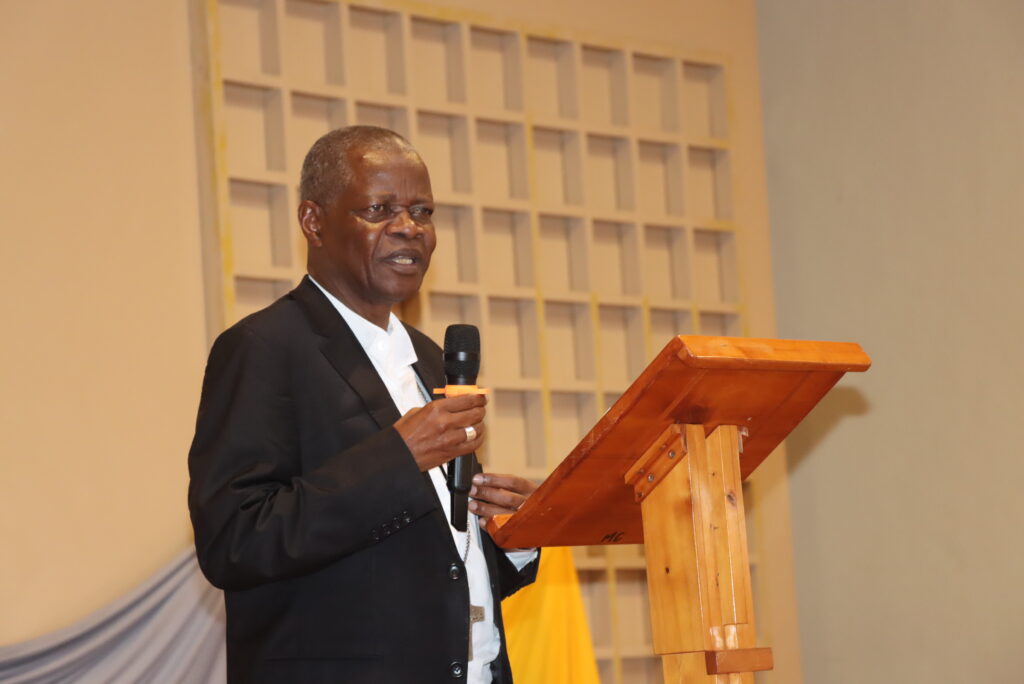
By Sarah Pelaji
The Catholic Church in Africa has been encouraged to rethink and strengthen its self-reliance in communication systems. This is necessary to keep up with global technological changes and the evolving digital environment.
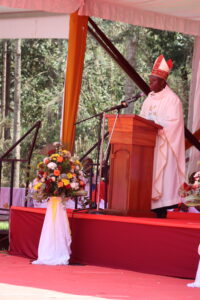
The President of the Pan-African Episcopal Committee for Social Communications (CEPACS), Rt. Rev. Bernardin Francis Mfumbusa made this call during the General Meeting of the Association of Member Episcopal Conferences in Eastern Africa (AMECEA) Social Communications Department.
The meeting taking place in Nairobi, Kenya, from November 25 to 27 has brought together Communication Directors from AMECEA member countries, as well as directors of Catholic television networks from across Africa.
The meeting aimed to boost the Church’s media capability, improve content production, and create a broader network for sharing news and stories from Africa. Bishop Mfumbusa emphasized the importance of the African Church thinking carefully about how to maintain and manage its communication systems.
The Tanzanian Prelate pointed out that much of the Church’s media history comes from missionaries who owned most of its communication platforms. He therefore urged Church leaders to fully embrace social media to stay relevant in a rapidly changing world, highlighting the growing problem of misinformation and the fragmentation of news on digital platforms.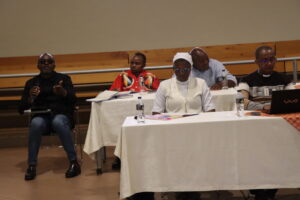
The Bishop Mfumbusa of Kondoa Diocese in Tanzania warned that a small number of powerful corporations, such as Amazon, Alibaba, Yahoo, and TikTok, increasingly control global media. In this environment, the Church must remain alert to protect the accuracy and integrity of its messages. At the same time, the Church should ensure that communications align with her mission to reach and serve people with messages of truth and hope.
Bishop Mfumbusa noted that the Social Communications Commission has created strategic plans to strengthen communication within the Church. These plans include ways to assess how well Church communication supports its pastoral vision. He mentioned the new Africa Strategic Plan 2025 to 2028, developed with APO Group.
This plan focuses on building capacity, improving information distribution, and monitoring media output. During the meeting, the Bishop introduced the Catholic Television Service for Africa (CTSA), a new network aimed at enhancing cooperation among Catholic television stations on the continent. This initiative seeks to improve the quality of content produced in Africa, encourage the sharing of experiences and programs, and significantly lower production costs.
He further cited Latin America as a successful example where a similar model has created a strong, effective network of Catholic television services. Bishop Mfumbusa urged African Catholic media leaders to embrace creativity, innovation, and courage in finding new ways to enhance the Church’s communication systems, stressing that the African Church has a unique and powerful story to share and that building a unified media network will strengthen the continent’s voice within the global Catholic community.
The Nairobi meeting was described as a significant event, establishing a renewed foundation for strengthening Catholic media in Africa through modern technology, better collaboration, and a shared commitment to delivering credible, compelling, and distinctly African stories to the world.