SOUTH SUDAN: At Plenary Assembly, Catholic Bishops Call for Peace and Unity
Ginaba Lino
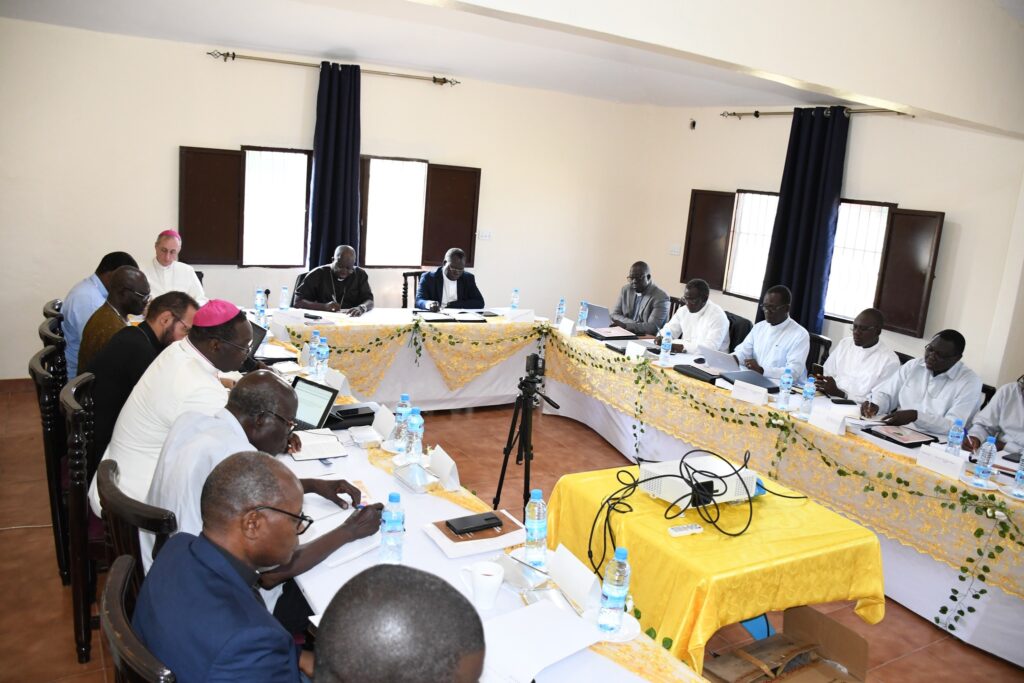
The Sudan and South Sudan Catholic Bishops’ Conference (SSSBC) held its five-day Plenary Assembly in Malakal, Upper Nile State, under the theme “Building Peace, Healing Wounds, and Strengthening Unity.”
The meeting brought together Church leaders from both nations and an AMECEA representative to reflect on the shared pastoral mission amid deep humanitarian challenges and to reaffirm their commitment to peace and reconciliation.
Ten Catholic Bishops, led by His Eminence Cardinal Stephen Ameyu Martin Mulla, the Metropolitan Archbishop of Juba, gathered in Malakal for the first time, a symbolic gesture of solidarity with a community that has endured years of conflict and displacement.
The Bishop of Malakal Diocese, Rt. Rev. Stephen Nyodho Ador, welcomed his fellow bishops, describing their presence as a “sign of hope and unity” for the faithful in a region still struggling to recover from the effects of war and flooding.
“I am very grateful that you accepted to hold this year’s Bishops’ plenary in Malakal despite the challenges and tragic news that often come from Upper Nile,” Bishop Nyodho said. “Your presence is a profound blessing to the Diocese and the people of Malakal in particular.”
In his opening address, Cardinal Ameyu, who serves as President of the Bishops’ Conference, reflected on the suffering of the people of both Sudan and South Sudan, describing it as a time of “deep wounds that demand faith, compassion, and concrete action.”
“The people of Sudan and South Sudan are enduring profound suffering, displacement, loss of life, destruction of churches and properties, and an unprecedented humanitarian crisis,” Cardinal Ameyu said. “Our role as shepherds is to stand with our people, accompany them in their pain, and work for the restoration of peace and dignity.”
The plenary discussions addressed key pastoral and social issues, including the growth of the Catholic faith, the strengthening of Church institutions, and the creation of new dioceses to reach the faithful in remote regions better. The Bishops are also set to evaluate the Church’s role in peacebuilding, governance, and social justice in both countries.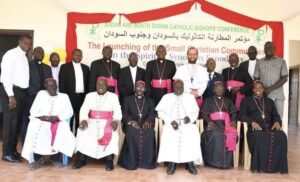
During the week, the Bishops visited the United Nations Protection of Civilians (POC) site in Malakal, home to thousands of internally displaced persons (IDPs) who continue to live under difficult conditions. They prayed with the community, distributed relief items, and listened to testimonies from families who have been displaced for more than a decade.
Bishop Nyodho said the visit was “a powerful reminder” of the Church’s ongoing mission to accompany those on the margins.
“These people are not just statistics; they are brothers and sisters who carry the cross of suffering every day,” he said. “The Church must continue to be their voice and source of hope.”
Cardinal Ameyu encouraged the displaced families not to lose faith, assuring them of the Church’s solidarity and continued humanitarian support through Caritas and other Catholic agencies operating in the region.
“Even in your suffering, God is with you,” he told them. “The Church will continue to walk with you until peace returns to your homes.”
The Cardinal also appealed to both the Government of South Sudan and the warring parties in Sudan to prioritize peace, dialogue, and national reconciliation over violence.
“No one was created for war; we were all created for peace,” he emphasized. “It is our moral and spiritual duty to build bridges, not barriers.”