AMECEA: Chairman Calls for Coordinated Pastoral Approach with IMBISA on Shared Challenges
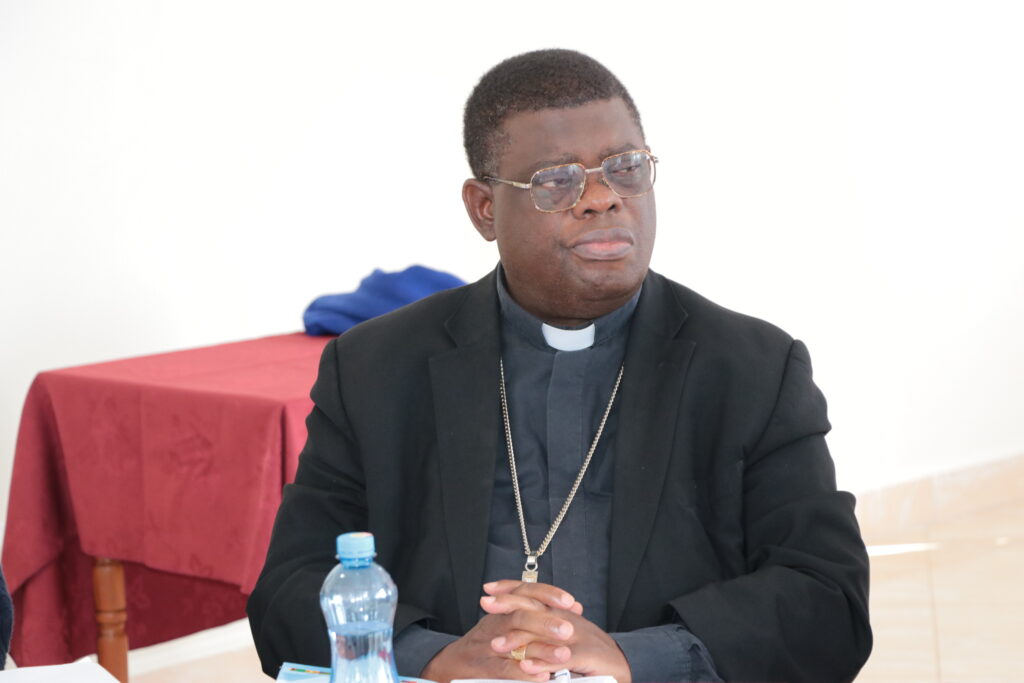
Bishop Charles Kasonde chairman of AMECEA
By Sr. Jecinter Antoinette Okoth, FSSA
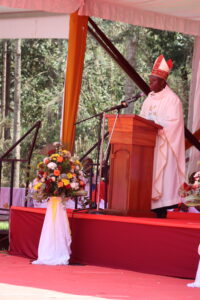
At the 14th Plenary Assembly of the Inter-Regional Meeting of Bishops of Southern Africa (IMBISA), currently ongoing at Manzini Diocese, Eswatini, the Bishop chairman of the Association of Member Episcopal Conferences in Eastern Africa (AMECEA) has shared a solidarity message with the delegates, calling for a unified pastoral approach to common issues affecting the two regions.
IMBISA and AMECEA are two of the eight conferences that form the continental body of the Bishops in Africa known as The Symposium of Episcopal Conferences of Africa and Madagascar (SECAM).
While addressing the delegates on Friday, September 26, Bishop Charles Sampa Kasonde of Solwezi Diocese, Zambia, said the realities facing the two neighboring regions (IMBISA and AMECEA) require deeper collaboration and stronger bonds of fraternity.
He pointed out the need for training Bishops on modern means of communication for effective engagement with both secular and religious media, and also the need for urgent pastoral collaboration on the pressing social challenge of human trafficking.
“In our recent AMECEA Executive Board meeting, the bishops instructed the Communications Department to explore ways of equipping bishops with the skills needed to use modern communication tools effectively and to engage constructively with secular media. I believe that greater collaboration between our two Communications Offices would be of immense benefit to the universal Church,” the Zambian Prelate narrated on Friday.
He continued, noting that regional issues must be met with regional solutions saying, “Another urgent area requiring our joint efforts is the fight against human trafficking. Both our regions have witnessed young people being trafficked through our countries, and this calls for a coordinated pastoral response.”
The week-long Plenary Assembly of IMBISA, being held under the theme ‘A synodal journey, nourished by compassion and blossoming in faith as pilgrims of hope, also marks the golden jubilee of mission and ministry for the region, and has brought together hundreds of bishops, clergy, religious, and lay faithful.
Stressing the significance of journeying together as regions in the spirit of synodality, which Pope Francis emphasised for the universal Church, Bishop Kasonde recalled the successful activities that came about as a result of cooperation between IMBISA and AMECEA, which enriched the Church in the regions.
The joint production of a three-volume communication course handbook for seminaries in the 1990s, the promotion of Small Christian Communities through the Gaba and LUMKO institutes, and the establishment of Catholic Parliamentary Liaison Offices in the early 2000s are the results of some of the coordinated pastoral action achieved by the two regions, the AMECEA chairman said.
He reminded the participants that since the establishment of AMECEA in 1961, the region has grown steadily over the past 64 years, and currently has 128 dioceses and serves more than 80 million people. Besides, the region has institutions, including the Catholic University of Eastern Africa (CUEA), the Blessed Bakanja Seminary, and the Pastoral Institute, which also hosts students from IMBISA countries, a step that further strengthens ties between IMBISA and AMECEA.
He affirmed that his presence at the plenary and that of the Secretary General of AMECEA, Very Rev. Fr. Anthony Makunde, as representatives of the Eastern Africa region, “is not merely a response to the invitation but a testimony to the fraternity which the Synod on Synodality calls us to both live and celebrate.”
He called on the member countries of IMBISA to pray for AMECEA, especially the countries faced by various challenges, “particularly Sudan, South Sudan, and the northern part of Ethiopia, which have experienced serious internal conflicts that have caused immense suffering, including loss of life, hunger, and inhuman living conditions. Also, remember the Church in Eritrea, which continues to face restrictions that hinder its freedom to fully carry out its mission.”
Bishop Kasonde concluded his address by extending an invitation to IMBISA leadership to attend AMECEA’s 21st Plenary Assembly next year, July 2026, in Kenya’s capital, Nairobi, which will focus on “bringing home” the message of synodality.
“I wish you fruitful discussions and inspiring deliberations in this 14th Plenary Assembly,” he said, affirming that greater cooperation between AMECEA and IMBISA will help both regions live out their call as “pilgrims of hope.”