KENYA: “Do Not be an Annoying Priest,” Prelate Cautions Newly Ordained Kenyan-born Mill Hill Priest
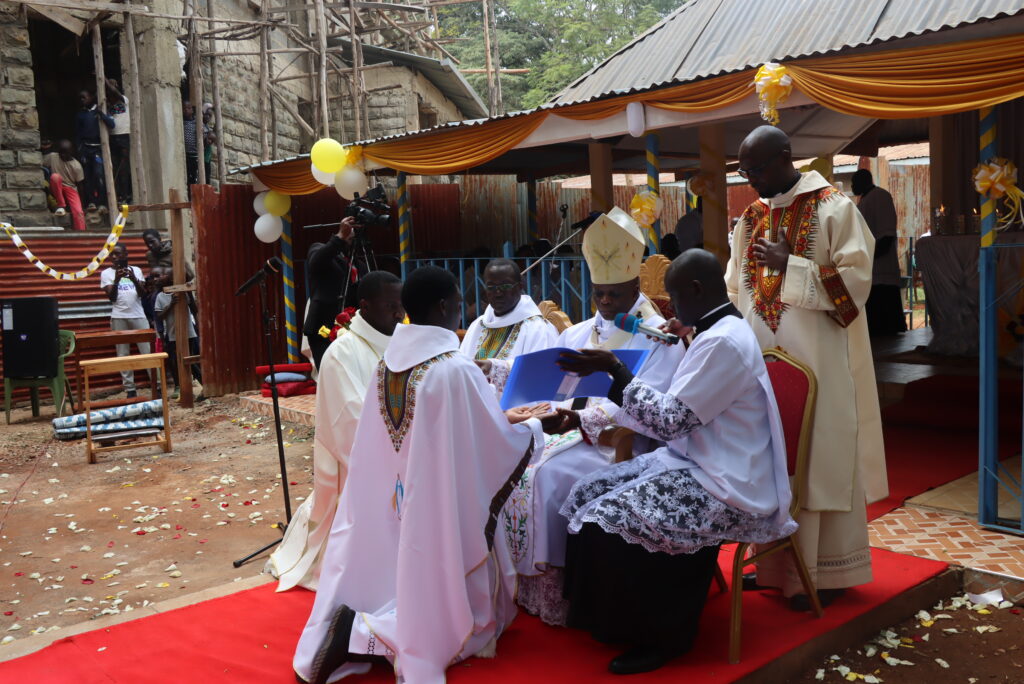
Ordination of Fr. Julius Oketch Agunda
By Sr. Jecinter Antoinette Okoth, FSSA
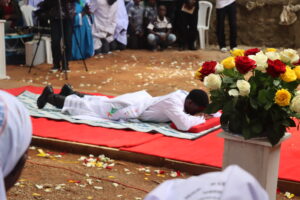
At a priestly ordination of a member of St. Joseph’s Missionary Society of Mill Hill in Kenya’s Kisumu Archdiocese at Our Lady of Fatima Ukwala Parish, the Local Ordinary cautioned the newly ordained Kenyan-born cleric, Fr. Julius Oketch Agunda, against becoming what he termed as “an annoying priest,” calling instead for a ministry that is marked by holiness, availability, and joyful service.
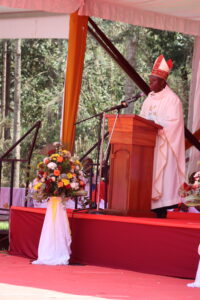
Archbishop Maurice Muhatia Makumba, in his preaching during the ordination Mass on Thursday, August 7, defined what he meant by an “annoying priest,” and cautioned against behavior that undermines the sacred mission of the priesthood.
“An annoying priest is one who is not available for Mass, not available for confessions, and visiting communities,” the Archbishop said and narrated, “The priest rushes through the celebration of sacraments, comes late to functions, never smiles, and does not make the youth and children feel welcome in Church.”
Instead, Archbishop Muhatia, who doubles as the Chairman for the Kenya Conference of Catholic Bishops (KCCB), called priests to be the kind of servants who reflect the love and mercy of God through their very presence.
“We must be attractive priests, punctual, committed, available, prayerful, and holy. These are the priests to whom the Father points and says, ‘This is my son, listen to him,’ he emphasized.
Speaking directly to Deacon Agunda just before his priestly ordination, the Archbishop encouraged him to embrace the new calling wholeheartedly, saying, “There are no impossible places in the world when it comes to the life of a priest. Go and minister to the people. The rest, leave to God. Don’t be an annoying priest. Be a good priest. Do your work.”
In his Thursday homily, Archbishop Muhatia reminded the congregation that every ordained priest carries a great responsibility as one who represents Christ. Drawing from the Gospel passage when God said, “This is my Son… listen to him,” he stressed that the divine affirmation applies to every priest.
 “This message places a huge responsibility on us as priests. We must do and say things that are worth listening to,” the Archbishop said, implying that priests need to live exemplary lives that reflect the Gospel, and their words and actions should be meaningful, truthful, and spiritually nourishing.
He encouraged the faithful to continually pray for their priests. “Sometimes we make mistakes. Don’t just criticize us, pray for us to be better agents of God’s love and mercy. And pray for me too, not to become an annoying bishop,” he added with a light touch.
The Archbishop further reflected on the words of the prophet Jeremiah, “Before I formed you in the womb, I appointed you,” and highlighted the sacredness of the priestly call, reminding the candidate, “God is doing you an honour. Just like He placed His words in the mouth of Jeremiah, He is placing His words in your mouth. You must speak not your own words, but God’s.”
According to the Archbishop, Deacon Agunda was being ordained to the priesthood at a time of renewed missionary spirit within the Archdiocese of Kisumu and his home parish of Ukwala, which has long-standing ties with the congregation commonly referred to as Mill Hill Missionaries.
The Archbishop recalled how the last Mill Hill missionary in the Archdiocese, Fr. Gerald Kraakman, served faithfully in the Archdiocese for decades before he retired recently and went back to the Netherlands. He said Agunda’s priestly ordination continues that legacy of missionary zeal.
To the people of Ukwala Parish, Archbishop Muhatia appreciated their enduring faith and generosity and said, “You are having an impact on the Universal Church because your sons and daughters are serving far and wide. May God continue to bless and nourish that seed of faith.”
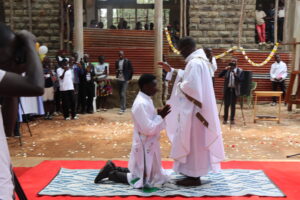 He concluded by reminding Fr. Agunda, who is set to begin his priestly ministry in Juba Archdiocese, South Sudan, and all priests to be with the people, especially those who suffer.
“As Jesus came down from the mountain to heal, a priest too must descend into the world to mend the broken relationship between humanity and God,” he narrated.