AMECEA: AMECEA Leads Regional Training to Strengthen Child Safeguarding in the Church
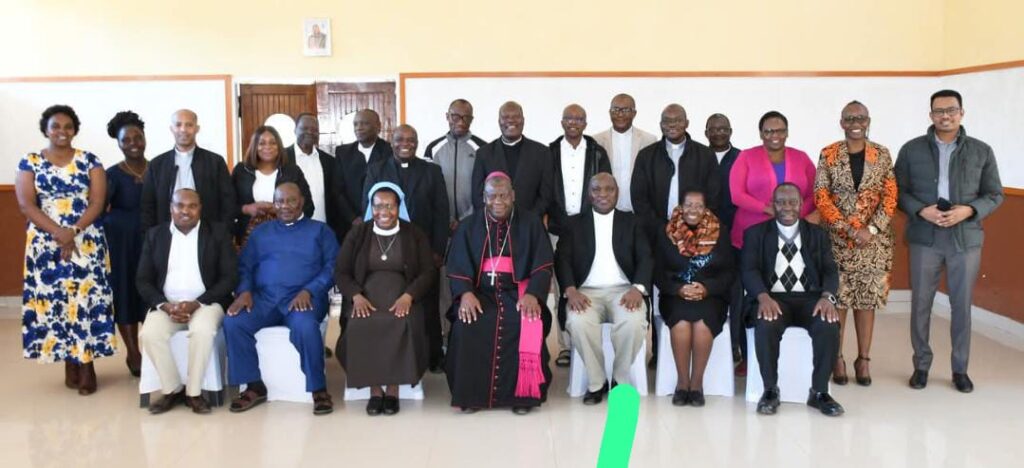
Participants during ToT on safeguarding in Malawi
Sr. Jecinter Antoinette Okoth, FSSA
To strengthen the Catholic Church’s capacity to respond effectively to child abuse cases, the Association of Member Episcopal Conferences in Eastern Africa (AMECEA) has launched a regional Training of Trainers (ToT) programme on Investigations and Handling Reports of Child Abuse.
The training, hosted at the Catholic Secretariat of Malawi from July 14–19, that brought together key safeguarding personnel from across the AMECEA region, including Bishops’ President of the Conferences, chairmen of the Seminary Commission and safeguarding officers, aimed to equip participants with practical tools and knowledge to address abuse cases with professionalism, compassion, and accountability.
In his opening remarks, Fr. Florence Rutaihwa, AMECEA Pastoral Coordinator, emphasized that the training is more than a routine capacity-building exercise but rather a moral and spiritual imperative.
“We must create safe and nurturing environments where children can grow in love, safety, and dignity,” the Tanzanian cleric said, adding that safeguarding is not only a technical task but also a gospel calling. He challenged participants to see themselves as agents of “love-inspired change” and to become catalysts for justice and transformation in their dioceses and communities.
According to Fr. Rutaihwa, the training, which was a response to a call by bishops during the consultative meeting, addressed practical gaps in case management and reporting systems, acknowledging that while global child protection frameworks exist, there are still significant challenges related to accountability and service quality across the region.
By focusing on the development of standardized case management guidelines and clear reporting procedures, AMECEA aims to ensure more coordinated and effective safeguarding responses.
Fr. Rutaihwa highlighted the need for collaborative efforts, stating that: “Child protection is a shared responsibility among the Church, governments, civil society, and local communities. We cannot achieve peace and justice if our children are left behind.”
The training also reflected on the evolving role of the Church in safeguarding vulnerable persons. It calls upon priests, religious, and lay faithful to promote human dignity actively and to confront injustice.
Referencing the Final Document on Safeguarding (#150), Fr. Rutaihwa stressed the need to invest in people, training qualified personnel who can assist victims and prevent future harm.
With heartfelt urgency, he reminded participants that abuse, in any form, erodes the harmony of society and offends God’s order of peace and justice. “The world is unwell because of indifference. When we care for the most vulnerable, we begin to heal the world.”
Fr. Rutaihwa concluded by saying, “The hour for action is now. This is a critical moment for our region. Let us rise together and act boldly for the protection of every child and vulnerable adult entrusted to our care.”